
























⏱ Estimated reading time: 6 minutes
Concrete Mixer Hire Explained: What Size Do You Need and How to Book with HSS DIY
Whether you’re laying a shed base, building a garden wall or tackling a driveway project, mixing concrete by hand is hard work - and frankly, it doesn’t have to be.
At HSS DIY, we’ve got a range of concrete and cement mixers available for hire, from compact electric models perfect for weekend DIY projects to heavy-duty diesel mixers built for larger construction jobs. Here’s everything you need to know from choosing the right size to how to mix concrete in a mixer.
Why Hire a Concrete Mixer Rather Than Buy?
Unless you’re mixing concrete every other weekend, buying a mixer outright rarely makes financial sense for most homeowners. A hired mixer gives you access to a well-maintained, fully serviced machine exactly when you need it - without the storage hassle, maintenance costs or upfront expense of owning one.
Hire vs Buy: Which Is Right for You?
Still weighing up whether to hire or buy outright? Here’s a straightforward breakdown to help you decide.
Pros of Hiring a Concrete Mixer:
- No upfront purchase cost - pay only for the days you need it.
- Access to well-maintained, fully serviced equipment every time.
- No storage space required between jobs.
- Flexible hire periods from a single day to weekly hire.
- Hire Packs bundle extras like wheelbarrows at a reduced rate.
- Upgrade to a larger or different model if your project changes.
- Delivered to your door
Cons of Hiring a Concrete Mixer
- Hire costs can add up if you need the equipment repeatedly over time.
- Availability may vary at busy periods - booking ahead is recommended.
Pros of Buying a Concrete Mixer
- More cost-effective over the long term if you mix concrete regularly.
- Available on demand - no need to plan around hire availability.
Cons of Buying a Concrete Mixer
- Significant upfront cost, especially for larger or petrol/diesel models.
- Ongoing maintenance, servicing and storage requirements.
- Depreciation - equipment loses value over time.
- You’re responsible for repairs if something goes wrong.
For most homeowners tackling a one-off or occasional project, hiring is the smarter, more cost-effective choice. If you’re a tradesperson or contractor mixing concrete on a near-daily basis, ownership may make more sense in the long run.
What Size Concrete Mixer Do You Need?
Getting the size right comes down to two things: the scale of your project and whether you have access to a power supply on site. Here’s a breakdown of the main options available at HSS DIY.
Small to Medium DIY Projects: Tip-Up Electric or Petrol Mixer (85 Litres)
For most home DIY jobs such as laying a shed base, paving a path, laying stepping stones or building a small wall, a tip-up concrete mixer with an 85-litre drum capacity is the go-to choice. These fast-working machines can mix a full 85-litre batch in approximately 6 minutes, and the rotating tilting stand lets you tip the mix straight into a wheelbarrow, saving your back in the process.
You’ve got two options:
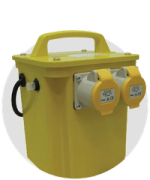
- Electric - Quieter, cleaner and ideal for residential use or jobs close to a power source. The 110v electric mixer runs safely a transformer and extension lead, so you’re not tied to being right next to a socket. It’s also suitable for indoor or semi-enclosed use, as long as ventilation is adequate. An RCD is recommended when working outdoors or in damp conditions and on 240v models.
- Petrol - A great choice when you’re working somewhere without easy access to mains electricity, such as the far end of a garden or on a remote outdoor site. Petrol mixers offer more mobility and power, though they do produce fumes so they’re not suited for indoor use. Note that petrol is not supplied with the hire.
HSS DIY also offers convenient Hire Packs that bundle the mixer together with an 85-litre wheelbarrow at a reduced combined rate - a genuinely handy addition for any concreting job.
Larger Construction Projects: Bulk Concrete Mixer Diesel
If you’re working on something more demanding - think larger foundations, significant groundworks or a busy construction site - the bulk diesel concrete mixer is designed for the job. Trolley-mounted for easy movement around site and built to handle high-volume mixing efficiently, this is the machine to reach for when a standard tip-up mixer won’t keep up with your workload. White or HVO fuel can be purchased separately online. The bulk hire pack also includes a shovel and wheelbarrow at a combined rate, so you’ve got everything you need to get moving.
Electric vs Petrol vs Diesel - Which Should You Choose?
Still not sure? Here’s a quick summary to help you decide:
- Electric mixer - Best for: garden patios, shed bases, small walls and indoor projects. Quieter, no fumes, easy to use solo. Requires access to a power supply.
5 stars. Perfect for my small little building project at home. Colin Vaughan, 19 November
- Petrol mixer - Best for: remote outdoor sites, driveways and projects away from a power source. More portable, but noisier and not suitable for enclosed spaces.
5 stars. great kit. easy to use. reliable. Nick Binger, 31 July
- Diesel bulk mixer - Best for: large-scale construction, groundworks and high-volume jobs where speed and output matter.
5 stars. Helpful machine. Kornel, 10 November
What Projects Are Concrete Mixers Suited For?
Not sure if you actually need a mixer for your project? If your job involves any of the following, the answer is almost certainly yes:
- Laying a concrete shed base or garden building foundation
- Building a garden wall or raised bed with mortar
- Paving a patio, path or driveway
- Laying stepping stones
- Pouring a garage floor or concrete slab
- Small groundwork or landscaping tasks
For all of these, a tip-up mixer with an 85-litre drum will typically do the job well. Anything involving larger footings, structural foundations or extended construction work is where the bulk diesel mixer earns its place.
⚠️ Safety Tips Before You Start
Concrete mixers are simple to operate, but a few sensible precautions go a long way:
- Always wear steel toe-capped boots and gloves when working with heavy materials and moving equipment
- Wet concrete can cause severe skin irritation or burns, to prevent cement burns and lung damage from silica dust PPE is recommended. (See PPE).
- Place the mixer on stable, level ground before use.
- Use an RCD with the electric mixer when working outdoors or in damp conditions.
- Keep the petrol or diesel mixer well ventilated - never use in an enclosed space.
How Does Weather Affect Concrete Setting?
If you're planning a concreting project in the UK, weather is one of the most important factors to consider. Temperature, rain and frost can all have a significant impact on how concrete sets and getting it wrong can mean a weakened, cracked or failed result.
Cold Weather and Frost
Concrete sets through a chemical reaction called hydration, and cold temperatures slow this process significantly. Below 5°C, hydration almost stops entirely - and if freshly poured concrete freezes before it has cured, the water inside expands, causing cracking and a weakened structure. Avoid pouring concrete when temperatures are at or near freezing and always check the forecast for overnight lows as well as daytime temperatures. If you need to work in cold conditions, cover fresh concrete with an insulated layer to retain heat and protect it from frost.
Hot Weather
Heat speeds up the setting process, which sounds helpful but can actually cause problems. When concrete sets too quickly, you have less time to work with it before it becomes unworkable and rapid surface drying can lead to shrinkage cracks. In hot conditions above 25°C, try to mix and pour in the cooler parts of the day, use cold water in your mix, and keep the surface damp by covering it with wet hessian a damp proof membrane for the first 24–48 hours.
Rain
Light rain is unlikely to cause serious issues if the concrete has already begun to set, but heavy rain falling on freshly poured concrete is a real problem. It dilutes the surface mix, washes out cement and weakens the final result. Always check the forecast before you start and have polythene sheeting on hand to cover your pour quickly if the weather turns. Never add extra water to a mix to compensate for rain - this will only weaken it further.
Ideal Conditions for Pouring Concrete
For the best results, aim to pour concrete when:
- Temperatures are between 10°C and 25°C
- No rain is forecast for at least 24 hours after pouring
- There is no risk of overnight frost
- The ground is not waterlogged or frozen
How to Mix Concrete in a Mixer: A Quick Guide
Once you’ve got your hired mixer on site, here’s how to get a consistent, well-mixed batch every time.
What You’ll Need
- Cement
- Sand
- Aggregate (gravel)
- Clean water
- A wheelbarrow
- A shovel
And the following PPE:
- Waterproof gloves
- Safety goggles
- FFP2 Mask
- Long-sleeved clothing or coverall
- Protective gloves
- Steel toe-capped boots
Simply add each item to your basket before you checkout on HSS.com. Buy the materials. Hire the tools. All in one place.
Step-by-Step: Mixing Concrete in a Mixer
- Start the mixer before adding materials - never load a stationary drum. Switch it on and let it spin before adding anything.
- Add half your water first - pouring in around half the required water before dry materials helps prevent clumping and sticking to the drum walls.
- Add the aggregate - shovel in your gravel or coarse aggregate first. For a standard mix, use a 1:2:3 ratio: 1 part cement, 2 parts sand, 3 parts aggregate.
- Add the cement and sand - follow with your cement and then sand, allowing the drum to blend the dry mix together for a minute or two.
- Add the remaining water gradually - pour in the rest of your water slowly, checking consistency as you go. You’re aiming for a smooth, workable mix that holds its shape without being sloppy.
- Mix for at least 3-5 minutes - a full 85-litre batch takes around 6 minutes. The mix is ready when it’s uniform in colour and texture with no dry patches.
- Tip straight into your wheelbarrow - use the rotating tilting stand to pour the mix cleanly and get to work quickly. Concrete begins to set within 30–45 minutes, so don’t hang about.
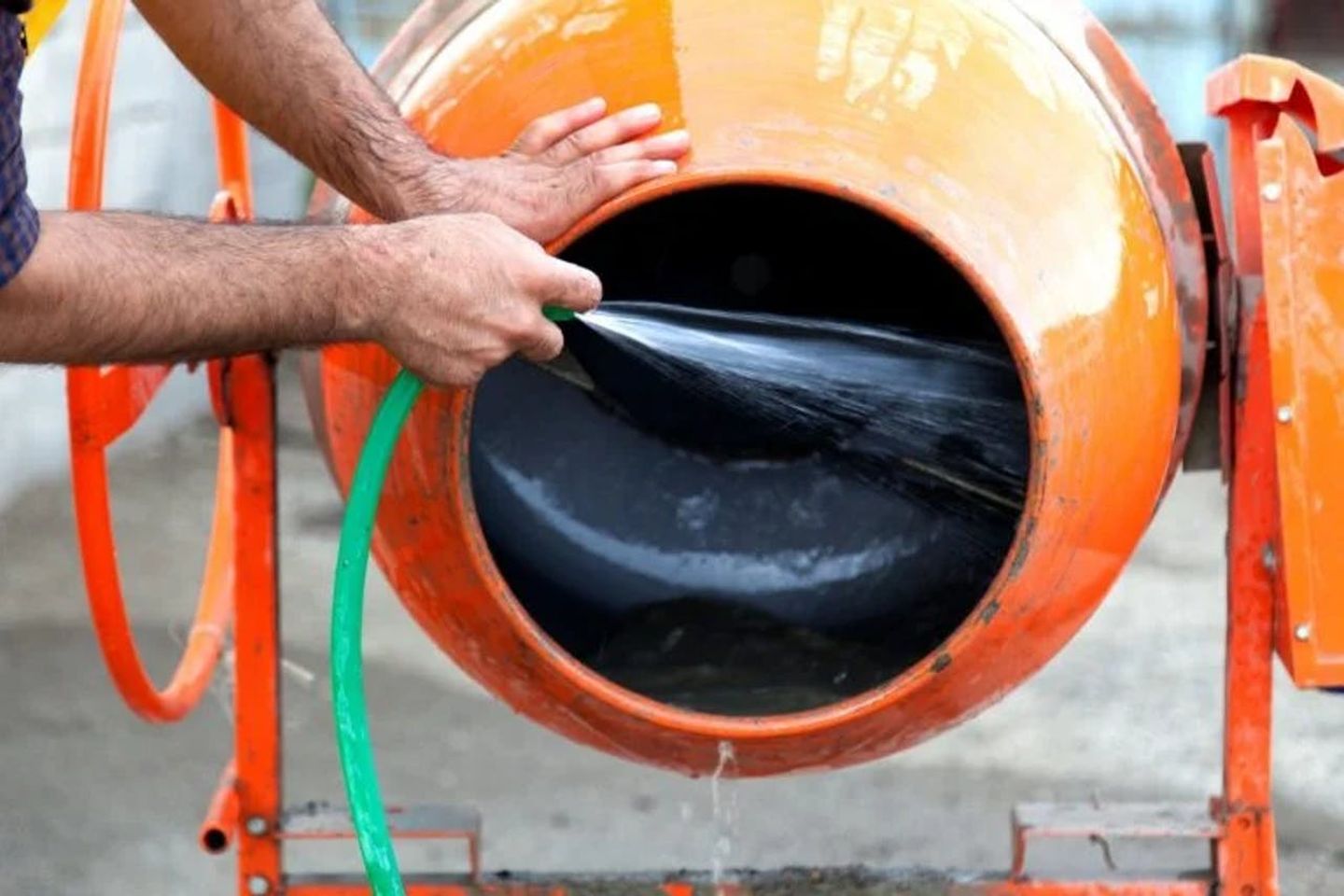
Pro tip: Always clean the drum with water immediately after each batch. Letting concrete set inside the drum makes it extremely difficult to remove and could result in additional charges on your hire.
For standard general-purpose concrete such as shed bases, paths and garden walls, a 1:2:3 cement:sand:aggregate mix with a water-to-cement ratio of around 0.5 is a reliable starting point. For mortar (bricklaying and pointing), use a 1:4 or 1:5 cement-to-sand ratio without aggregate. For a full breakdown of mix ratios for different project types, DIY Doctor's concrete mixing guide is an excellent homeowner-friendly reference.
Frequently Asked Questions
How long can I hire a concrete mixer for?
HSS DIY offers flexible hire periods to suit your project - from a single day through to weekly hire. When booking online, simply select your start and end dates to see pricing for your preferred duration. If your project runs over, just get in touch and the team can extend your hire.
Do I need any experience to use a concrete mixer?
Not at all - HSS DIY’s tip-up mixers are designed to be straightforward for solo operation and are a great choice for first-time users. Ensure you read and understand the enclosed instructions before you start the job.
Can I use a concrete mixer indoors?
The 110v electric mixer is suitable for indoor or semi-enclosed use, provided ventilation is adequate and the power supply is appropriate. Petrol and diesel mixers produce exhaust fumes and should never be used indoors or in enclosed spaces.
Can I mix mortar as well as concrete in a hired mixer?
Yes, all of HSS DIY’s tip-up mixers and bulk mixers can handle standard concrete, cement and mortar mixes, making them versatile for a wide range of tasks from bricklaying and paving to general building work.
What happens if I return the mixer with concrete left in the drum?
Always clean the drum thoroughly with water and a stiff brush immediately after your last use, before any residual concrete has a chance to set. Hardened concrete is extremely difficult to remove once dried, so a quick rinse after every batch - and a thorough clean once finished is strongly recommended to avoid any additional cleaning charges.
Ready to Get Mixing?
Hiring a concrete mixer from HSS DIY means you get well-maintained, reliable equipment without the cost or faff of ownership - and with an easy online booking system, getting the right kit for your project has never been more straightforward. Whether you’re a first-time DIYer or a seasoned fixer-upper, HSS DIY has everything you need to get the job done properly.
Buy the materials. Hire the tools. All in one place.
The Home of Great Projects.
Further Reading: DIY Doctor