




- Hire
- Breaking Drilling
- Electric Breakers
Electric Breakers
When you need to break up concrete, hiring the right breaker turns hours of brutal sledgehammer work into a job done in minutes. Our range of electric concrete breakers covers everything from light-duty wall and tile removal to heavy-duty road and slab demolition that can shift up to 6 tonnes of concrete per hour. All available for daily, weekend or weekly hire — with click & collect from your nearest branch or delivery to your home or site.
Choosing the right concrete breaker
Pick a breaker that matches the scale of the job. Going too light slows you down; going too heavy is unwieldy, harder to control, and costs you more in hire fees and operator fatigue.
Heavy-duty concrete breakers
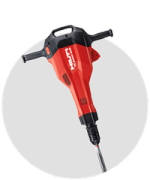
For roadworks, reinforced concrete slabs, foundations and pipe-laying groundworks. Our Hilti TE3000 delivers 68 joules of impact energy and breaks up to 6 tonnes of concrete per hour. The unit weighs around 30kg and ships with a transport trolley to make moving it around site straightforward.
Medium-duty concrete breakers
The right call for breaking out channels for pipe runs, removing concrete around rebar, or demolishing smaller slabs and foundations. The Hilti TE2000 weighs just 14.5kg but matches the breaking power of much heavier rivals — up to 3 tonnes of concrete per hour, and far easier to handle if you're not using one every day.
Light-duty and vibration-damped breakers
For interior renovation — removing tile beds, screed, lightweight partition walls or chiselling out smaller areas. Lower vibration levels mean longer permitted run times under HAVS regulations and less operator fatigue across a working day.
Wall-tile removers and needle scalers
Specialist tools for stripping wall tiles or surface-prep on concrete and steel. Smaller and more controllable than a full breaker, and lower-impact for finishing work where you don't want to damage what's underneath.
Frequently asked questions about concrete breaker hire
What size concrete breaker do I need? For a domestic driveway, garage floor or patio, a medium-duty breaker (around 14–15kg) is usually the right balance of power and control. For reinforced concrete, road breaking or commercial slabs, step up to a heavy-duty breaker (around 30kg). For wall tiles or interior screed, a light-duty or vibration-damped breaker is easier to handle and won't damage surrounding work.
Do I need a compressor to hire a concrete breaker? Not for our electric breakers. The full electric range — including the Hilti TE2000 and TE3000 — runs from a standard 110V site supply, so no compressor is needed. If you specifically want a pneumatic breaker, see our air breaker hire range.
Can I hire a concrete breaker for a day? Yes. We offer daily, weekend and weekly hire on all our concrete breakers. Weekly rates work out cheaper if you're spreading the work over multiple days. Hire periods start from when you collect or take delivery.
How much concrete can a breaker shift per hour? It depends on the model and the concrete. Our heavy-duty Hilti TE3000 breaks up to 6 tonnes per hour in good conditions. The medium-duty TE2000 manages around 3 tonnes per hour at less than half the weight, which makes it much easier to handle on smaller domestic and trade jobs.
What PPE do I need to use a concrete breaker? Safety goggles or a face shield, ear defenders (breakers run at around 95–100 dB), steel-toe boots, gloves, and a hard hat if there's any risk of falling debris. Dust masks or extraction are essential when breaking concrete indoors. We can supply PPE alongside your breaker hire.
Can a beginner use a concrete breaker? Yes, particularly with a lighter or vibration-damped model. Modern electric breakers like the TE2000 are designed with T-handle layouts and active vibration reduction to make them manageable for occasional users. Start with shorter runs, let the breaker's weight do the work, and don't force the chisel.
Electric vs petrol vs air — which concrete breaker should I choose? Electric is the default for most jobs — quieter, no fumes, and works anywhere with a 110V supply. Petrol breakers are best for remote sites with no power. Air (pneumatic) breakers suit very heavy continuous industrial use but need a compressor, which adds cost and setup time.
Do you deliver concrete breakers? Yes. We deliver across the UK, or you can click & collect from your local branch. Heavier units come with a transport trolley to make moving them around site easier.
Filters

Fetching products
When you need to break up concrete, hiring the right breaker turns hours of brutal sledgehammer work into a job done in minutes. Our range of electric concrete breakers covers everything from light-duty wall and tile removal to heavy-duty road and slab demolition that can shift up to 6 tonnes of concrete per hour. All available for daily, weekend or weekly hire — with click & collect from your nearest branch or delivery to your home or site.
Choosing the right concrete breaker
Pick a breaker that matches the scale of the job. Going too light slows you down; going too heavy is unwieldy, harder to control, and costs you more in hire fees and operator fatigue.
Heavy-duty concrete breakers
For roadworks, reinforced concrete slabs, foundations and pipe-laying groundworks. Our Hilti TE3000 delivers 68 joules of impact energy and breaks up to 6 tonnes of concrete per hour. The unit weighs around 30kg and ships with a transport trolley to make moving it around site straightforward.
Medium-duty concrete breakers
The right call for breaking out channels for pipe runs, removing concrete around rebar, or demolishing smaller slabs and foundations. The Hilti TE2000 weighs just 14.5kg but matches the breaking power of much heavier rivals — up to 3 tonnes of concrete per hour, and far easier to handle if you're not using one every day.
Light-duty and vibration-damped breakers
For interior renovation — removing tile beds, screed, lightweight partition walls or chiselling out smaller areas. Lower vibration levels mean longer permitted run times under HAVS regulations and less operator fatigue across a working day.
Wall-tile removers and needle scalers
Specialist tools for stripping wall tiles or surface-prep on concrete and steel. Smaller and more controllable than a full breaker, and lower-impact for finishing work where you don't want to damage what's underneath.
Frequently asked questions about concrete breaker hire
What size concrete breaker do I need? For a domestic driveway, garage floor or patio, a medium-duty breaker (around 14–15kg) is usually the right balance of power and control. For reinforced concrete, road breaking or commercial slabs, step up to a heavy-duty breaker (around 30kg). For wall tiles or interior screed, a light-duty or vibration-damped breaker is easier to handle and won't damage surrounding work.
Do I need a compressor to hire a concrete breaker? Not for our electric breakers. The full electric range — including the Hilti TE2000 and TE3000 — runs from a standard 110V site supply, so no compressor is needed. If you specifically want a pneumatic breaker, see our air breaker hire range.
Can I hire a concrete breaker for a day? Yes. We offer daily, weekend and weekly hire on all our concrete breakers. Weekly rates work out cheaper if you're spreading the work over multiple days. Hire periods start from when you collect or take delivery.
How much concrete can a breaker shift per hour? It depends on the model and the concrete. Our heavy-duty Hilti TE3000 breaks up to 6 tonnes per hour in good conditions. The medium-duty TE2000 manages around 3 tonnes per hour at less than half the weight, which makes it much easier to handle on smaller domestic and trade jobs.
What PPE do I need to use a concrete breaker? Safety goggles or a face shield, ear defenders (breakers run at around 95–100 dB), steel-toe boots, gloves, and a hard hat if there's any risk of falling debris. Dust masks or extraction are essential when breaking concrete indoors. We can supply PPE alongside your breaker hire.
Can a beginner use a concrete breaker? Yes, particularly with a lighter or vibration-damped model. Modern electric breakers like the TE2000 are designed with T-handle layouts and active vibration reduction to make them manageable for occasional users. Start with shorter runs, let the breaker's weight do the work, and don't force the chisel.
Electric vs petrol vs air — which concrete breaker should I choose? Electric is the default for most jobs — quieter, no fumes, and works anywhere with a 110V supply. Petrol breakers are best for remote sites with no power. Air (pneumatic) breakers suit very heavy continuous industrial use but need a compressor, which adds cost and setup time.
Do you deliver concrete breakers? Yes. We deliver across the UK, or you can click & collect from your local branch. Heavier units come with a transport trolley to make moving them around site easier.
Filter
Sort by


