



Please note: Images are for illustration purposes only. Actual product supplied may differ.
Don't forget we also offer training courses through HSS Training. View details of the courses here.
There are no custom specifications for this product
There is no custom safety information for this product
Super Prop
Don't forget we also offer training courses through HSS Training. View details of the courses here.
There are no custom specifications for this product
There is no custom safety information for this product
Questions
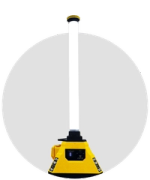
A Super Prop is used to provide strong temporary support in construction projects, especially for heavy loads such as floors, ceilings, or lift shafts during building or renovation work.
The Super Prop is made from lightweight aluminium and can handle up to twelve times the load of a traditional steel prop, making it stronger and easier to manoeuvre.
It’s primarily designed for professional use due to its heavy-duty capacity, but experienced DIY users may find it useful for major structural or renovation projects.
You’d use it when supporting heavy structures temporarily—such as during floor repairs, wall removals, beam installations, or lift shaft construction.
Yes, it’s suitable for both indoor and outdoor projects, as long as it’s positioned on a stable, level surface to safely support the load.
Yes, it features a four-start self-cleaning thread that allows quick and smooth height adjustments even on dusty or dirty worksites.
Back propping is the process of adding temporary supports beneath a floor or structure while construction or repair work is being carried out above.
Yes, despite its strength, the aluminium design makes it relatively lightweight and easy for one person to handle and position.
The Super Prop can handle extremely heavy loads, such as those encountered in commercial or structural building projects, up to 12 tonnes.
While it’s straightforward to use, proper understanding of load-bearing and placement is important. HSS offers training courses to help users operate equipment safely.
Yes, it’s ideal for both ceiling and wall support during construction, particularly in cases where a stronger prop is required.
Always ensure it’s placed vertically on a flat, solid surface, with the load evenly distributed across the top plate to prevent slipping or shifting.
Yes, its compact and lightweight design makes it suitable for use in tight or awkward locations such as lift shafts or basements.
You should wear gloves, safety goggles, and steel toe boots, and ensure protection against falling objects when working on site.
Despite its high load capacity, the prop is lightweight enough to be moved easily, though you’ll need a suitable vehicle such as a small truck for transport.