








⏱ Read time: 6 min 📊 Difficulty: Beginner 🔧 Setup time: 15 to 30 mins 👷 Manpower: 1 person
Every year, at approximately 11am on the first genuinely warm day in May, the same thought occurs to roughly four million people across the UK simultaneously: I should have sorted the air conditioning before now.
By the time a proper heatwave warning goes up, the hire availability for portable air conditioners drops considerably - everyone has the same idea at the same time and the pool of available units isn't infinite. The people who booked in April or early May are sleeping comfortably at 22°C. Everyone else is lying awake in a 34°C bedroom at midnight, directing a desk fan at their face and wondering if this is what it was always going to come to.
This guide covers everything you need to know about hiring a portable air conditioner from HSS DIY - what size to hire, how to set it up properly, why hiring beats buying for the UK's brief but brutal summer heat, and how to make sure the unit actually works as well as it's supposed to.
At HSS DIY - The Home of Great Projects - you can hire portable air conditioning units from compact domestic models to full industrial cooling systems, online 24/7 with next day delivery. 'Buy the materials. Hire the tools. One order. All in one place.'
Why May Is the Right Time to Book Cooling Hire
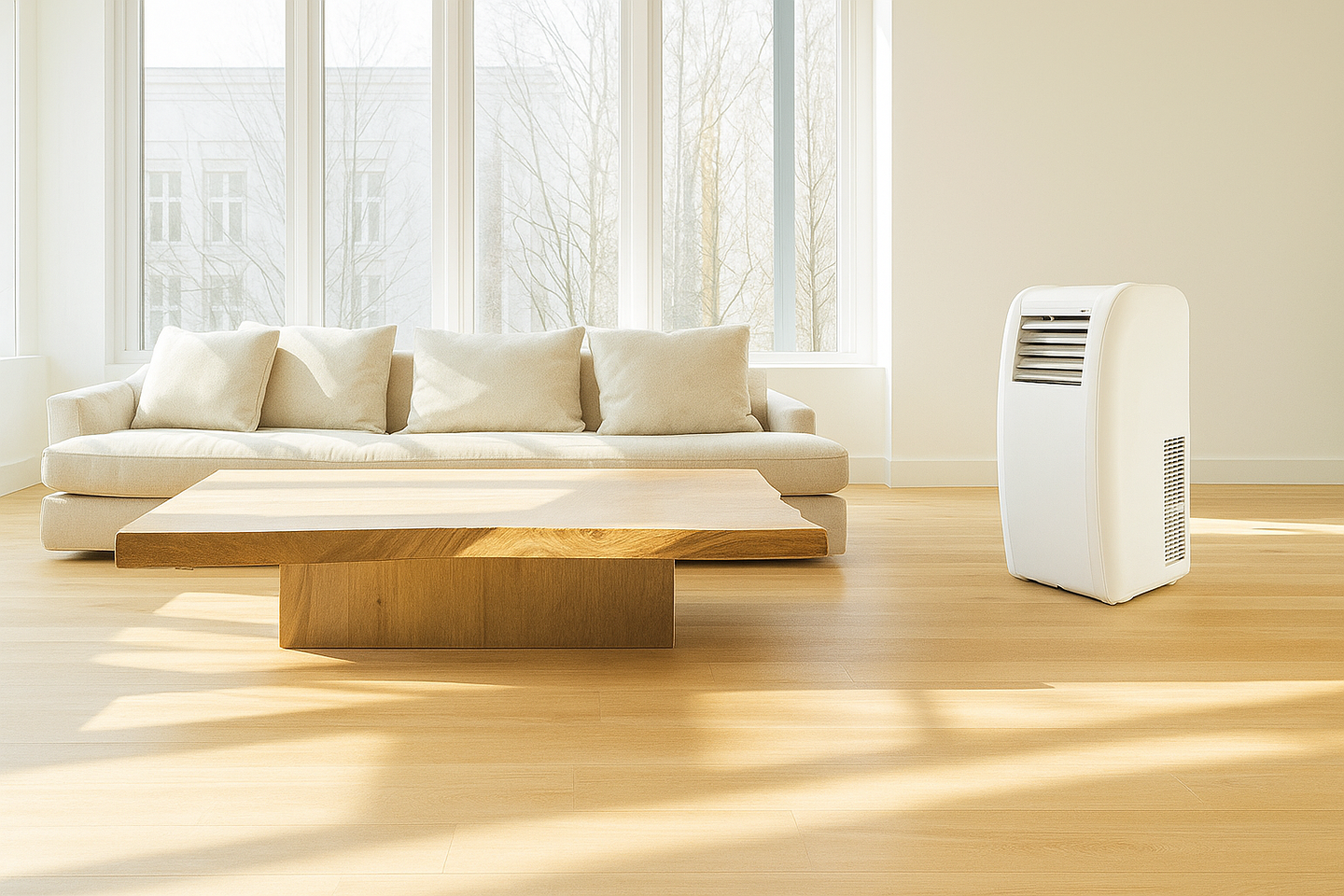
The UK doesn't do summer gradually. One week it's a perfectly reasonable 17°C with a light drizzle, and the next the Met Office is issuing heat health warnings for the Southeast and the garden centre has sold out of paddling pools. The transitions are fast, the extreme heat spells can be short but genuinely dangerous, and hiring availability moves in direct correlation with the temperature.
Booking a portable air conditioner in May - before the heat arrives - means you get the unit, the size you want, delivered when you want it. Booking it on the second day of a 35°C heatwave means choosing from whatever's left. Which might be fine. Or might not be.
External source: Met Office heatwave information sign up for heatwave alerts so you get enough notice to book before the rush.
Hotter Summers Are Not a Coincidence - The Met Office Has the Numbers
Why UK Summers Are Getting Harder to Manage - The Climate Picture
Hotter UK summers are not an anomaly anymore. They are the new pattern, and the data from the Met Office makes that very clear.
According to the Met Office's 2026 global temperature outlook, published in December 2025, 2026 is forecast to be the fourth consecutive year in which global average temperatures exceed 1.4°C above pre-industrial levels. The central estimate is 1.46°C - just below 2024's record of 1.55°C, which was the first year to temporarily breach the 1.5°C Paris Agreement threshold. Professor Adam Scaife of the Met Office noted that prior to this surge, global temperatures had not exceeded 1.3°C. The pace of change has accelerated significantly.
For homeowners, this has a very practical meaning. A bedroom or home office that was manageable in a hot summer ten years ago is now regularly hitting temperatures that make sustained work or decent sleep genuinely difficult. A portable air conditioner is no longer a luxury purchase decision - it is a sensible response to a documented and accelerating trend.
- More frequent heat events: extreme heat days that were historically rare are projected to become considerably more common across the UK as global temperatures rise
- Longer hot spells: extended periods of heat above 30°C in summer are expected to increase in both duration and frequency, affecting construction programmes, warehouses, offices and domestic living spaces alike
- Higher baseline temperatures: even average summer temperatures are trending upward, meaning spaces that were manageable in previous decades are now regularly exceeding comfortable or safe working limits
Source: Met Office - 2026 Outlook: Likely Another Year Above 1.4°C
If You Work from Home or Employ Staff in Your Business
If You Work From Home or Run a Business From Your Property
The legal picture is primarily relevant to employers with staff, but it is worth knowing the context even for home workers and sole traders.
- Home workers: if you are employed and working from home, your employer still has a duty of care toward your working environment under the Health and Safety at Work etc. Act 1974. In practice this means discussing cooling arrangements with your employer if your home office regularly exceeds comfortable working temperatures in summer
- Sole traders and the self-employed: self-employed people are responsible for their own working environment. There is no external legal enforcement of temperature limits for a self-employed person working from home, but the NHS guidance on heat and health - which recommends keeping occupied spaces below 26°C during hot weather - is the practical standard worth working to
- Small businesses with employees: if you employ staff, even in a home office or small commercial premises, the Workplace (Health, Safety and Welfare) Regulations 1992 apply. You are required to maintain a reasonable temperature and take action when heat becomes a health risk. Providing a portable air conditioner or evaporative cooler when temperatures regularly exceed comfortable limits is a proportionate and reasonable control measure
NHS heatwave guidance including recommended indoor temperatures: nhs.uk/live-well/seasonal-health/heatwave-how-to-cope-in-hot-weather
Project at a Glance - Setting Up a Portable AC Unit
Difficulty: Beginner | Setup time: 15 to 30 minutes | Manpower: 1 person
Setup in Three Steps - It's Simpler Than Most People Expect
Step 1 - Position the unit (5 mins): Place the unit on a level surface, ideally close to the window or ceiling void where the exhaust duct will exit. Most portable units are wheeled - position them so the exhaust duct reaches the window without excess bending or strain. Keep at least 50cm of clear space around the unit for adequate airflow.
Step 2 - Route the exhaust duct (10-15 mins): The exhaust duct removes the warm air the unit extracts from the room - it must exit somewhere, usually through an adjacent window. Most portable units come with 3m of ducting and a window seal kit. The duct can also go through a ceiling tile into a ceiling void in commercial settings. A duct that's too long or bent sharply loses efficiency - keep it as short and straight as practical.
Step 3 - Switch on and set temperature (5 mins): Plug in, switch on, set to your target temperature. Most hired portable units have digital controls and multiple fan speeds. A room takes time to cool - allow 30 to 60 minutes for a hot room to reach a comfortable temperature. For bedrooms, set the unit running before you want to sleep, if the room has been baking all afternoon it will take time to cool down.
Which Size Air Conditioner Do You Need?
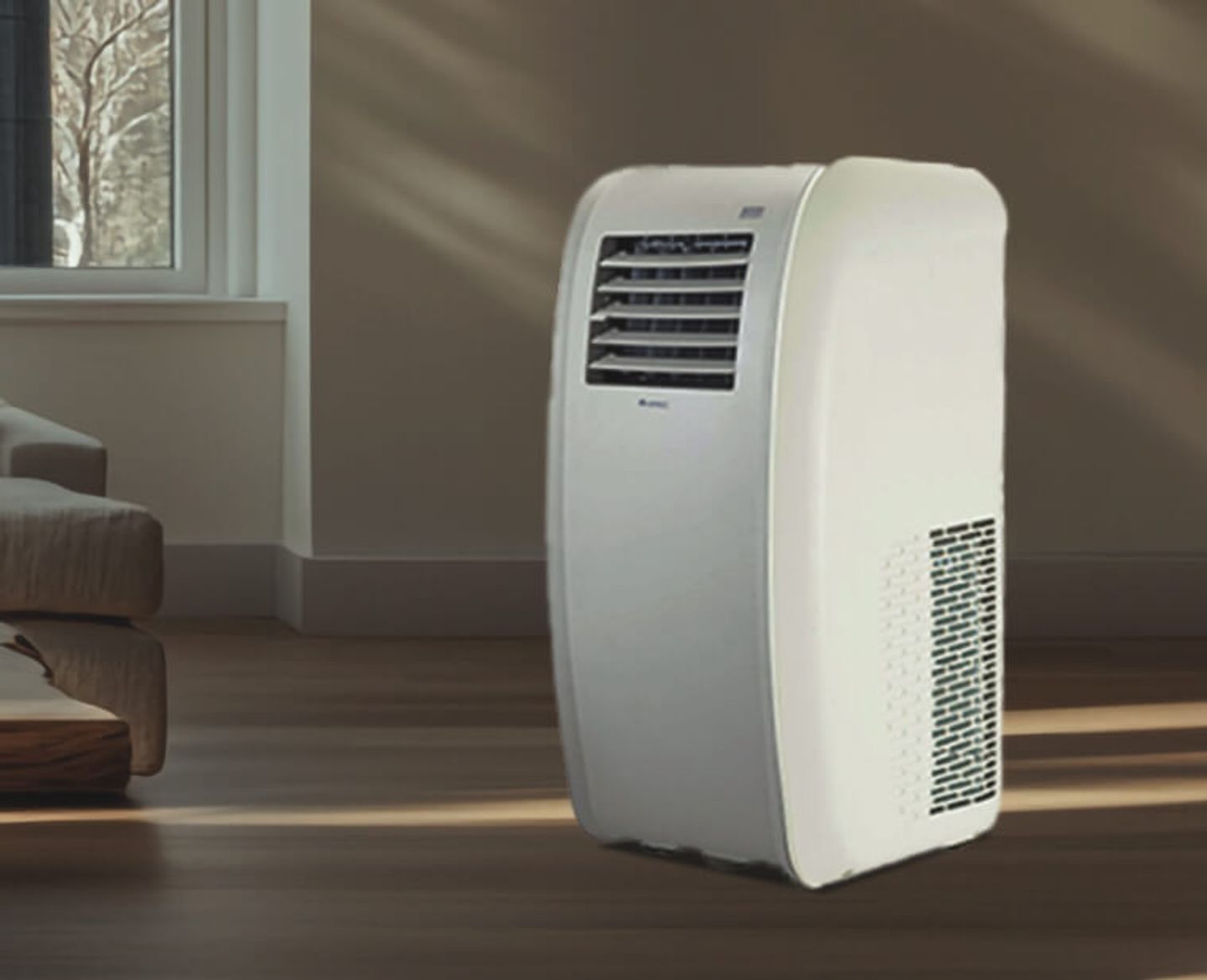
The most common mistake with portable air conditioning hire is under-sizing the unit. An air conditioner that's too small for the room runs constantly, works hard and still doesn't cool the space properly. Getting the size right before booking is the difference between a room that's actually comfortable and one that's merely slightly less terrible.
Small room - up to 25m²: Compact 3.5kW unit (approximately 12,000 BTU). Covers a bedroom, home office, small living room or single conference room. The quiet 55dB operation means it won't compete with a Zoom call or disturb light sleepers.
Medium room - 25 to 40m²: A 5kW+ unit or commercial-grade portable AC (14,000+ BTU). Large open-plan living room, a sizeable home office, retail space or medium-sized meeting room. The medium 5.3kW unit with 3m ducting covers this range well.
Large or industrial space - 40m²+: Industrial air handling units or multiple portable units working together. Warehouses, workshops, large event spaces. The HSS DIY air conditioning range covers from 3.5kW domestic up to 150kW commercial air handling. For industrial cooling requirements, the live chat team at hss.com can advise on the right specification.
South-facing rooms and direct sunlight: Add approximately 10% to your required cooling capacity. A room with large south-facing windows in direct afternoon sun needs meaningfully more cooling than a shaded north-facing room of the same size.
The HSS DIY Air Conditioning Hire Range
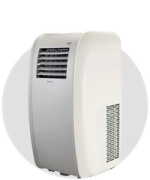
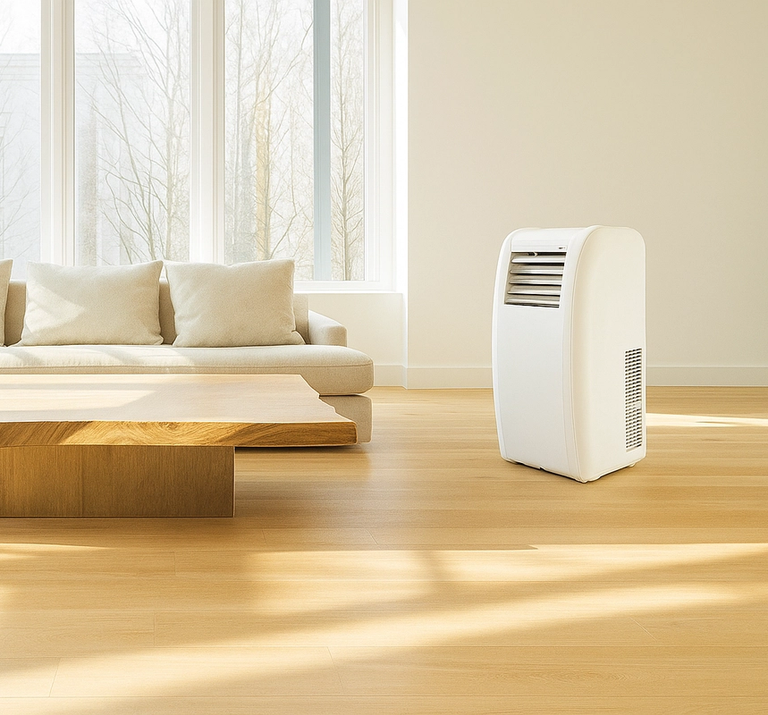
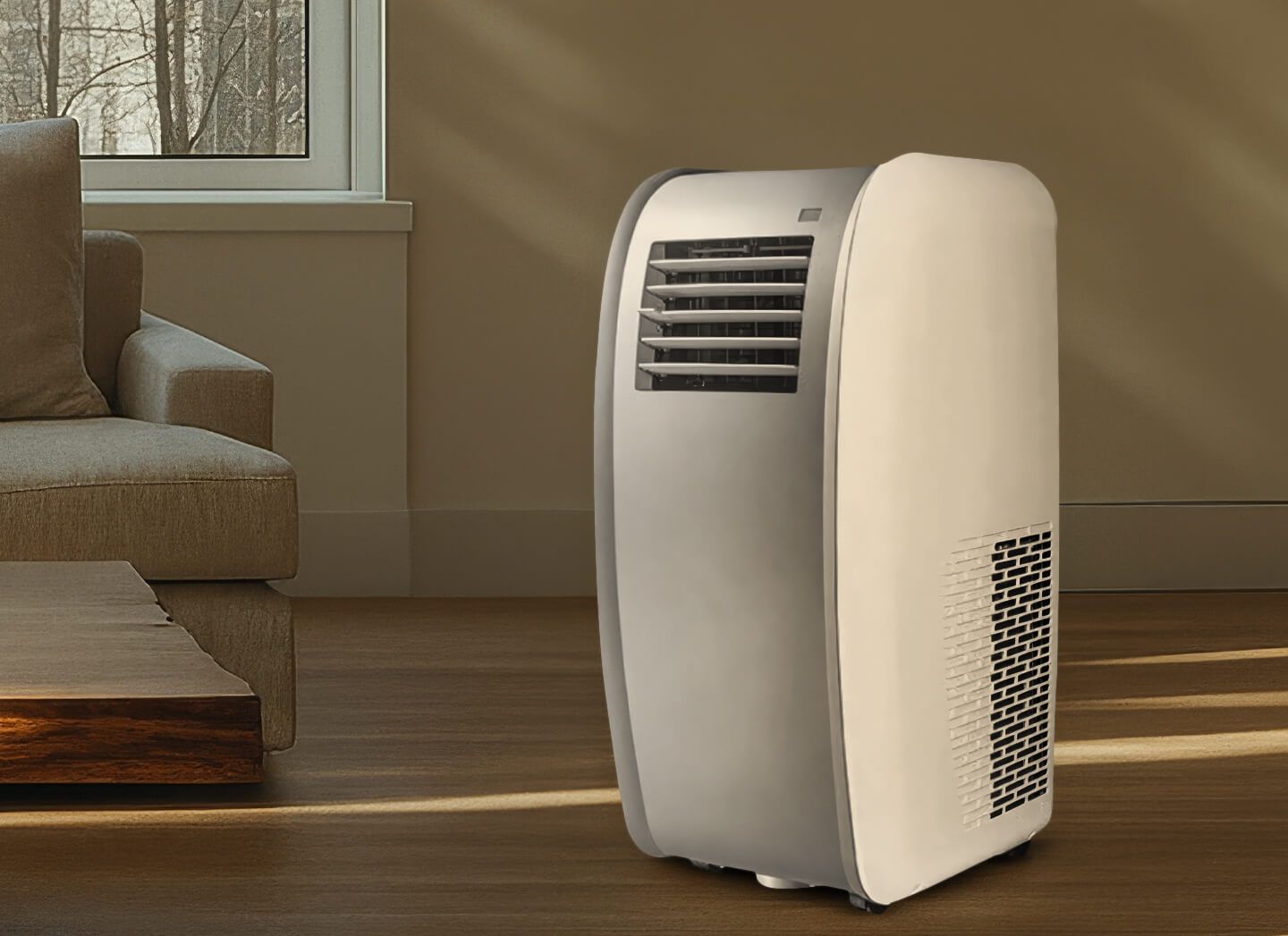
Compact Air Conditioner - 3.5kW | Up to 25m² | 55dB | Wheeled castors
Best for: Bedroom, home office, small living room - single room domestic cooling
The go-to domestic hire. Quiet enough at 55dB to work or sleep alongside. Castors mean you can move it between rooms during the day. Cools rooms up to 25m² efficiently. Suitable for offices, conference rooms, classrooms and home use. Plug-and-play 240V mains supply - no installation required. The unit most homeowners and home workers actually need.
Hire Compact Air Conditioner 3.5kW
Commercial Portable Air Conditioner | 14,000+ BTU | Up to 30m² | Low noise | Eco-friendly refrigerant
Best for: Large bedroom, open-plan home office, retail space, conference room up to 30m²
For rooms too large for the compact 3.5kW to handle comfortably. 14,000+ BTU cooling capacity with energy-efficient design and eco-friendly refrigerant. Low noise operation - won't disrupt a call or a meeting. Suitable for home and office environments. Still portable and wheeled - not a fixed installation.
Hire Commercial Air Conditioner
Full air conditioning hire range: hss.com/hire/c/air-con-cooling/air-conditioners | All Cooling Equipment | Evaporative Coolers

5 Tips for Getting the Most from a Hired Portable AC
The unit does the heavy lifting, but a few basics make the difference between a room that stays cool and one that never quite gets there:
- Keep the exhaust duct short and straight. Every extra metre and every bend reduces cooling efficiency. Position the unit as close to the window as the room allows.
- Seal the gap around the window duct. Warm outside air sneaking back in around the duct cancels some of the work the unit is doing. The window kit supplied with most hired units helps - use it. A draught excluder or foam tape on any remaining gaps makes a noticeable difference.
- Start the unit before the room heats up. A portable air conditioner cools a room efficiently when it's working to maintain temperature. It works much harder - and takes much longer - to cool a room that's already at 34°C. Switch it on in the morning, not at 3pm when the damage is done.
- Close doors and curtains on the sunny side. The unit is cooling the room it's in, not the hallway beyond the open door. Keep the room sealed and draw the curtains on south-facing windows to reduce solar heat gain. Basic physics - and it makes a meaningful difference to how quickly the room cools.
- Book before the heatwave, not during it. Hire availability for cooling units drops significantly as soon as a heat warning is issued. If the Met Office is showing 30°C-plus days ahead, book the unit before the nation collectively decides it needs one at the same time. The HSS DIY cooling range has next day delivery but it's not infinite.
Hire or Buy? The Honest UK Summer Calculation
The UK gets genuinely hot for approximately three to six weeks per year - variable, unpredictable, but real. Whether hiring an air conditioner makes more sense than buying one depends almost entirely on how often you'd actually use it.
A compact portable AC costs upwards of £250 to buy - and that's a basic domestic model. A hired unit gives you a properly maintained, higher-specification machine for the weeks you actually need it and goes back when the weather returns to sensible British normality. For most homeowners who suffer through two or three hot weeks a year, hiring wins on cost, storage and practicality.
Compact 3.5kW portable AC - Hire from ~£60/week | Buy new £250-£600+ | For UK summer use: Hire for a hot spell; buy if you use it every summer for 2+ months.
Commercial portable AC (5kW+) - Hire from ~£80/week | Buy new £500-£1,200+ | For UK summer use: Hire. Overkill to own for 2-3 hot weeks per year.
Industrial air handling unit - Hire from ~£150+/week | Buy new £2,000-£10,000+ | For UK summer use: Hire only - not a domestic purchase by any reasonable definition.
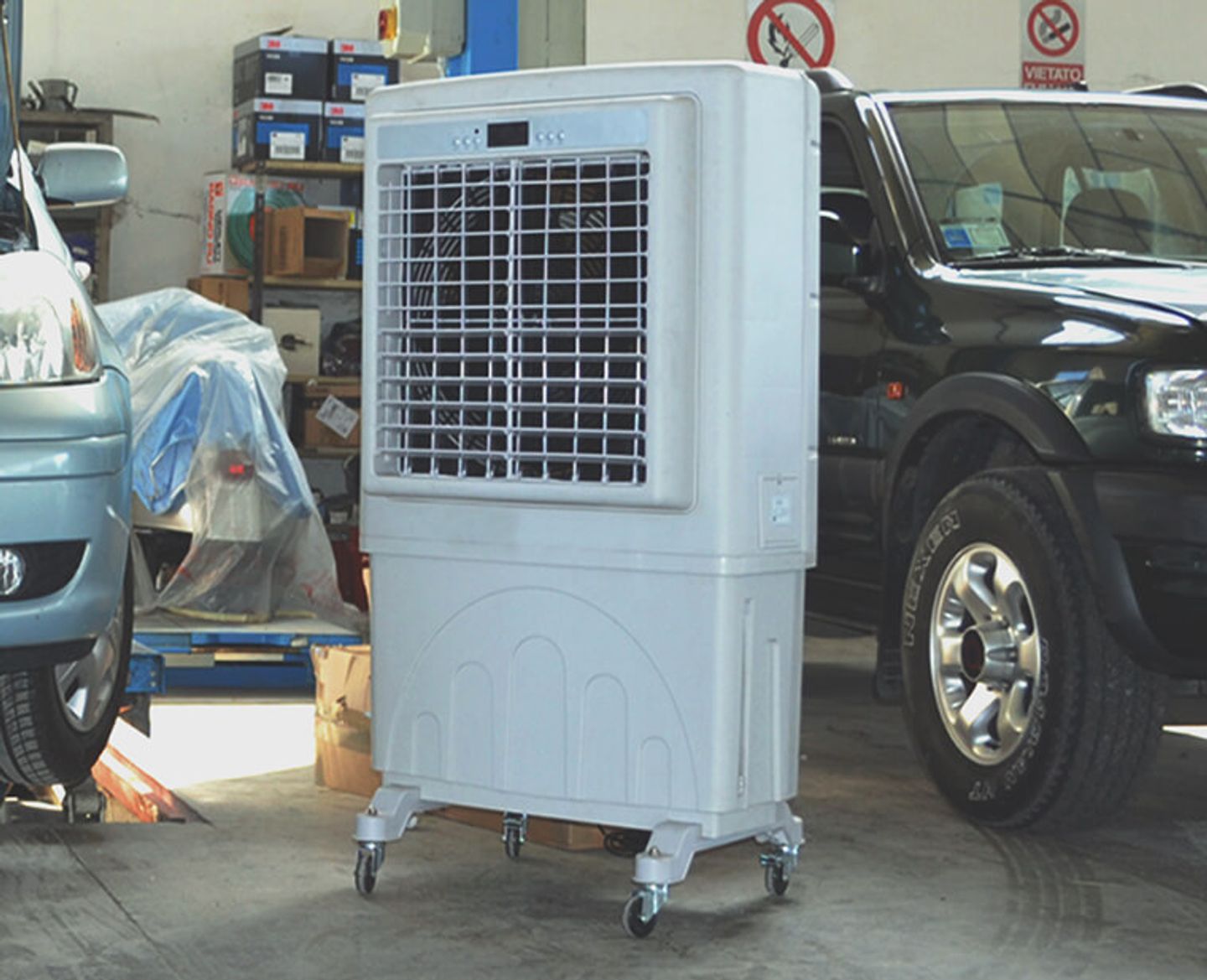
Cooling fan / evaporative cooler - Hire from ~£25/week | Buy new £50-£200+ | For UK summer use: Either - worth owning if you use it throughout summer.
Prices are estimates. Verify current rates at hss.com - pricing is location-specific. Weekly rates are available and significantly more cost-effective than daily rates for a warm spell.
Before You Set Up
- HSS DIY YouTube - youtube.com/@HSSDIY - Equipment guides and project content from The Home of Great Projects. Check for portable air conditioner setup content.
- HSS DIY Blog - Which Air Conditioner Is Right for You? - Background reading on AC types, BTU calculation and what to consider before hiring.
- How to set up a portable air conditioner - search 'how to set up portable air conditioner UK' on YouTube for content covering window seal kit installation and duct routing. Most units have similar setup procedures - 15 minutes is genuinely enough time to have the unit running.
Real Project: Home Office Heatwave - A South-Facing Upstairs Room in July
Case Study: Home Office Heatwave - Working Through a 35°C Week
The situation: A home office in a south-facing upstairs bedroom. Fine nine months of the year, a genuine health hazard in a British heatwave. The room hit 34°C by mid-afternoon during a hot spell in July, making sustained work essentially impossible and sleep considerably worse.
What was hired: Compact 3.5kW portable air conditioner from HSS DIY. Next day delivery. Setup took twenty minutes - unit positioned at the far end of the room, exhaust duct routed out of the window using the supplied window seal kit.
The result: Room temperature stabilised at approximately 22°C by mid-morning. No more 4pm productivity collapse. Sleep returned to something approximating normal. The unit ran at 55dB - audible as a background hum but absolutely manageable for working and sleeping.
The verdict: Total weekly hire cost was less than a fraction of the productivity lost to heat the previous year. Hired for two weeks, returned when the weather broke. No installation, no permanent commitment, no devaluing a rented property.
Health and Safety - Keeping Cool Properly
A portable air conditioner is a genuinely low-risk piece of equipment for domestic use, but a few practical points are worth knowing before switching it on:
- Don't block the exhaust duct: the unit extracts warm air and exhausts it outside via the duct. Blocking or kinking the duct forces the unit to recirculate warm air, reducing cooling efficiency and potentially causing the compressor to overheat
- Check the water tray on single-duct units: some portable AC units collect condensate in an internal tray that needs emptying periodically - every day in humid conditions. A full tray causes the unit to shut off automatically. Check the product manual or product page for your specific model
- Don't use extension cables unless rated for the load: a portable air conditioner draws meaningful current, typically 5-12 amps depending on unit size. Use only extension cables rated for the appliance load, and avoid daisy-chaining extension leads
- Keep children and pets away from the air intake and exhaust: the intake draws air at speed and the exhaust duct can be warm on the exterior. Common sense, but worth mentioning
- Don't operate in sealed, unventilated conditions: the unit does need to exhaust somewhere. Operating a portable AC with a blocked or sealed exhaust is ineffective and potentially unsafe as the compressor overheats
- Heat-related illness: a hired portable air conditioner significantly reduces the risk of heat exhaustion and heat stroke in hot UK summers. The NHS recommends keeping living spaces below 26°C during heatwaves - particularly for older adults, young children and anyone with underlying health conditions
NHS heatwave guidance including recommended indoor temperature limits: nhs.uk/live-well/seasonal-health/heatwave-how-to-cope-in-hot-weather
Portable AC Hire - Room Sizing and Setup Guide
Before you book:
- Room size calculated: length x width = m². Up to 25m² - compact 3.5kW. 25-40m² - 5kW commercial unit. 40m²+ - contact HSS DIY live chat for industrial cooling specification
- South-facing or very sunny room: add 10% to required cooling capacity
- Number of people in the room: add approximately 600 BTU (0.18kW) per additional person beyond two in the space regularly
- Window available for exhaust duct: or ceiling void in commercial settings. The exhaust duct has to exit somewhere - confirm this before booking
- Power supply confirmed: all HSS DIY domestic portable air conditioners run on standard 240V mains. No special power supply needed
- Hire period decided: weekly hire is the most cost-effective option. Book the full expected warm spell - extending an existing hire is easier than re-booking once availability tightens
Setup on arrival:
- Unit positioned on level surface: at least 50cm clearance around the unit for airflow
- Exhaust duct routed to window: as short and as straight as practical. Window seal kit fitted
- Gap around window duct sealed: foam tape, draught excluder or the supplied seal kit
- Room sealed: doors closed, sunny-side curtains drawn
- Unit running before the room overheats: start in the morning, not mid-afternoon
Useful External Sources
NHS - Heatwave: How to Cope in Hot Weather: nhs.uk/live-well/seasonal-health/heatwave-how-to-cope-in-hot-weather - NHS guidance on keeping cool and safe during hot weather in the UK, including recommended indoor temperature ranges.
Met Office - UK Heatwave Information: metoffice.gov.uk/weather/warnings - Heatwave warnings, temperature forecasts and seasonal advice for the UK. Use this to decide when to book cooling hire in advance.
HSS DIY Blog - Which Air Conditioner Is Right for You?: hss.com/blog - air conditioning guide - HSS DIY's own guide to the types of portable air conditioner available, including BTU calculation guidance.
HSS DIY YouTube: youtube.com/@HSSDIY - Equipment guides and project content from The Home of Great Projects.
Frequently Asked Questions
How much does it cost to hire a portable air conditioner from HSS DIY?
Air conditioning unit hire from HSS DIY starts from approximately £60 per week for a compact 3.5kW domestic unit, with commercial and larger units available at higher weekly rates. Pricing varies by model, location and hire period. The most cost-effective way to hire for a warm spell is to book a weekly or multi-week rate rather than a daily rate - a two-week hire covers most UK hot spells at a meaningful saving. Check live pricing and availability at hss.com - rates are location-specific.
How do I know what size air conditioner I need?
The key calculation is room size in square metres multiplied by approximately 150 BTU per m² - or use kW as a rough guide: 3.5kW covers up to 25m², 5kW covers 25-40m². Adjust upward by about 10% for rooms with direct south-facing sunlight. The HSS DIY air conditioning category page includes a cooling calculator that does this automatically - it's worth using rather than estimating, because under-speccing the unit is the most common mistake. An undersized unit runs continuously, uses more energy and still doesn't cool the room properly.
Do portable air conditioners need to be vented outside?
Yes - all portable air conditioners that actually cool (rather than just circulate air) work by extracting warm air from the room and exhausting it outside via a duct. The duct needs to exit through an adjacent window, door or ceiling void. If there's nowhere for the duct to go, the unit is ineffective. Most hired HSS DIY portable units come with a window seal kit and ducting included. The exhaust duct should be kept as short and straight as possible - every bend and every extra metre reduces the cooling performance.
Can I hire an air conditioner for just a week or do I need to hire for a whole summer?
Weekly hire is the standard and most popular option for portable air conditioning. HSS DIY offers daily, weekend and weekly rates, and you can extend the hire if the warm weather continues longer than expected. There's no obligation to commit to a full summer - book the unit when you need it and return it when the weather breaks. Given how unpredictable UK summers are, the flexibility of hiring versus buying a fixed unit is genuinely useful.
What's the difference between a portable air conditioner and an evaporative cooler?
A portable air conditioner contains a refrigeration circuit - it genuinely cools the air by removing heat and exhausting it outside via a duct. An evaporative cooler (sometimes called a swamp cooler) works by passing air over water, which cools it through evaporation. Evaporative coolers are cheaper to hire and use less electricity, but they're significantly less effective in humid conditions - which is exactly when UK heatwaves tend to hit. If you need reliable cooling in a heatwave, hire the air conditioner. Evaporative coolers work well in dry climates but less reliably in the typically humid heat of a British summer.
Can I use a hired portable air conditioner in a rented property?
Yes. A portable air conditioner requires no installation, no drilling and no permanent changes to the property. It vents through an existing window using a seal kit that's removed when the unit goes back. This makes hired portable air conditioning a practical solution for rented properties where installing a fixed air conditioning unit would require landlord permission and professional installation. The seal kit leaves no marks and the unit rolls in and out on castors. Check your tenancy agreement if in doubt, but in practice hired portable units create no issues for renters.
The Weather's Coming, The Question Is Whether Your Cooling Is Ready.
Portable air conditioning hire from HSS DIY is one of those things that feels like a luxury until the third night of a heatwave, at which point it feels like an absolute necessity. The good news is that it's straightforward to sort - next day delivery, fifteen minutes to set up, and a genuinely dramatic improvement to sleeping and working conditions in hot weather.
The less good news is that the units don't materialise from thin air during a heatwave - availability does tighten. Booking now, ahead of the heat, is the single most effective thing you can do to guarantee you're comfortable when the temperature goes up. Which it will. Probably after a bank holiday. This is Britain.
Book Before the Heatwave. Not During It.
Browse the full air conditioning and cooling hire range at hss.com/hire/c/air-con-cooling/air-conditioners - online 24/7, next day delivery nationwide. Compact domestic units, commercial portable AC and industrial cooling all available.
Buy the materials. Hire the tools. One order. All in one place.
Get DIY Happy.
Prices shown are indicative hire and buy rates as of 14 May 2026 and subject to change. Always check hss.com for current pricing. HSS ProService Ltd.