





⏱ Read time: 7 min | 🌿 Difficulty: Beginner | ⏰ Time: Half a day (4 hrs) | 👷 2 people
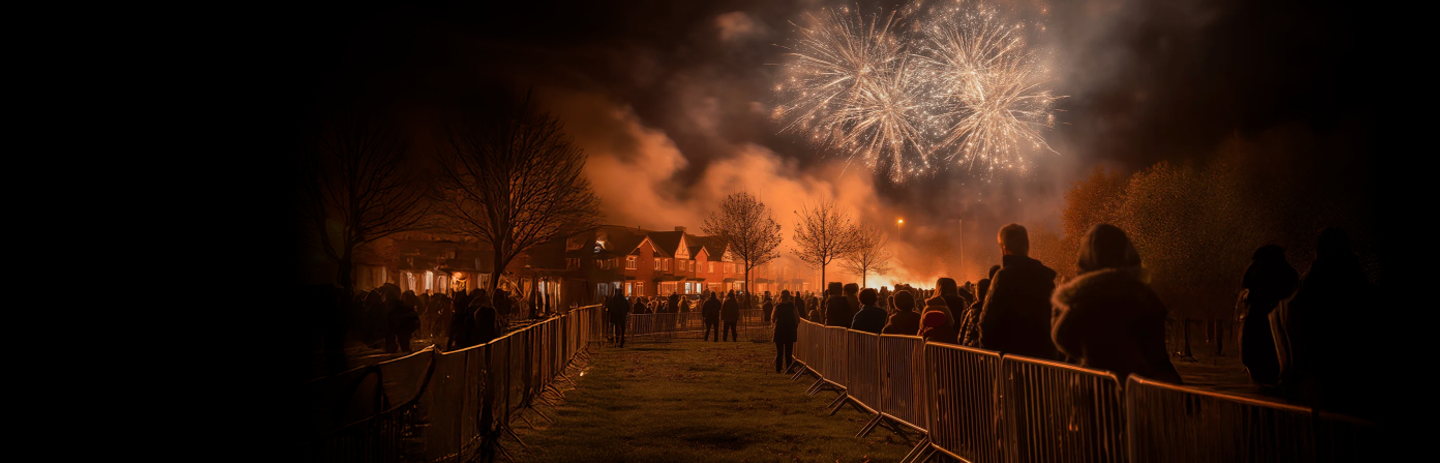
Planning a safe bonfire night at home means choosing a spot at least 5 metres clear of buildings and fences, burning only dry, untreated wood, and buying fireworks from a licensed retailer. Light them at arm's length with a taper, keep a water bucket handy, and supervise sparklers, pets and children throughout. Get this right, and bonfire night stays exactly what it should be: brilliant fun.
Top tips at a glance
- 5-metre rule: keep your bonfire at least 5 metres from buildings, fences, trees and washing lines, with a clear barrier around it.
- Burn clean: dry, untreated wood and paper only — never petrol, aerosols, tyres or foam.
- Buy legit, light safe: fireworks only from a licensed retailer, and stick to the curfew (11pm most nights, midnight on Bonfire Night itself).
- Check before you light: hedgehogs and other wildlife love a woodpile, so give it a once-over first.
- One person in charge: nominate a sober, responsible adult to handle fireworks, and keep everyone else back.
Table of contents
- What makes a bonfire night safe at home?
- How do I choose a safe spot for my bonfire?
- How do I build and light a bonfire safely?
- What's the safest way to enjoy fireworks at home?
- Bonfire at home or a public display: which is safer?
- How do I keep pets, children and neighbours safe?
- Is it cheaper to hire or buy your safety kit?
- When should I start planning?
- Downloadable bonfire night safety checklist
- FAQs
What makes a bonfire night safe at home?
A safe bonfire night comes down to three things: where you build it, what you burn on it, and how closely everyone's supervised. Get those right, along with basic firework safety, and you've dealt with most of the risk.
Bonfire Night brings a noticeable rise in garden fires and firework-related injuries every year, which is exactly why a little planning goes such a long way.

How do I choose a safe spot for my bonfire?
Choosing a spot for your bonfire is quite easy, once you know what you should be looking for. Here’s how to do it.
- Clearance: pick a flat, open spot that’s 5 metres minimum from buildings, fences and parked cars.
- Overhead check: no washing lines, telephone wires or low branches directly above the fire.
- Wind direction: build downwind of neighbouring gardens, so smoke and sparks blow away from windows and washing.
- Ground: bare earth or hardstanding rather than a lawn or patio you'd rather keep in one piece.
How do I build and light a bonfire safely?
Build it small, build it close to the day you'll light it, and only burn what you know is safe. A well-built bonfire is far easier to control than a big one that's got out of hand.
- Stack it late. Bonfires left sitting for days or weeks attract mess, and sometimes wildlife looking for a new home.
- Check before you light. Give the base of the pile a once-over for hedgehogs, cats or anything else that's moved in overnight.
- Burn dry, untreated wood and paper only. Skip painted or treated timber, chipboard, tyres, foam, aerosols and batteries — several release toxic fumes, and some can explode.
- Light from one point, upwind, using a taper rather than an accelerant. Never use petrol, paraffin or white spirit to get it going.
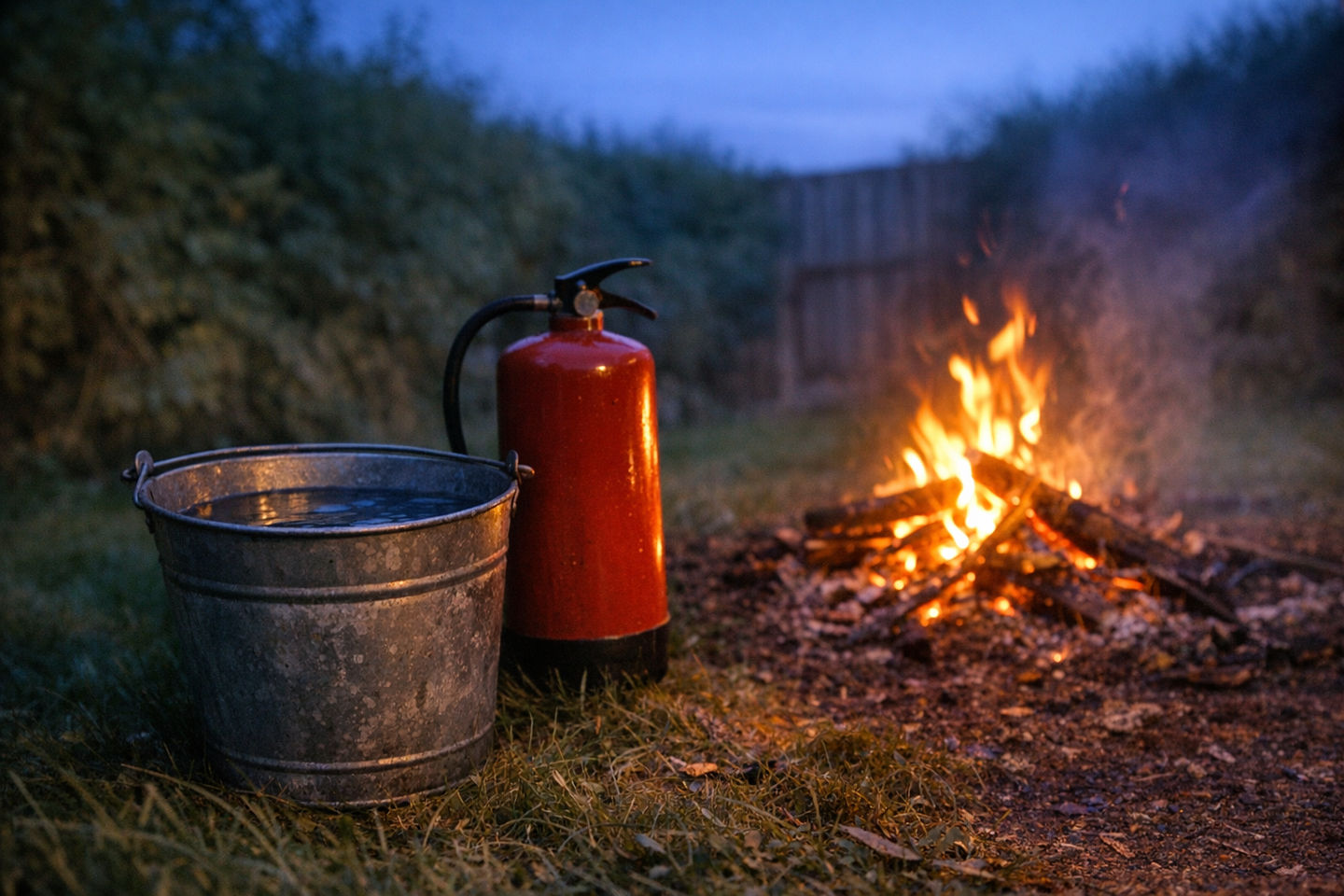
- Keep water on standby. A full bucket, a hose or a fire extinguisher within reach the whole time, and never leave the fire unattended.
- Douse it fully before bed. A fire that looks out can still be smouldering underneath hours later.
What's the safest way to enjoy fireworks at home?
Stick to fireworks bought from a licensed seller, follow the instructions on the box, and light one at a time from arm's length using a taper, then get well back behind a fixed line.
- Buy from a licensed retailer and check for a CE or UKCA safety mark on the box.
- Read the instructions first, using a torch rather than a naked flame. No instructions, no firework.
- Light at arm's length with a taper, one firework at a time, on firm, level ground.
- Never go back to a dud. Leave it for at least 30 minutes, then soak it in water before disposal.
- Watch the sparklers closely. They burn several times hotter than boiling water, so gloves are sensible and they're never for under-fives.
- Know your curfew: fireworks must stop by 11pm on a normal night, but you get until midnight on Bonfire Night itself, and 1am on New Year's Eve, Diwali and Chinese New Year.
Source — gov.uk/fireworks-the-law

Bonfire at home or a public display: which is safer?
If you're weighing up a DIY bonfire against your local organised display, here's how the two compare across the things that matter most.
How do I keep pets, children and neighbours safe?
Tell your neighbours what you're planning a few days ahead, keep pets indoors with the curtains closed, and never let anyone under 18 handle adult fireworks.
Pets: the RSPCA recommends bringing dogs and cats indoors before fireworks start, closing windows and curtains, and putting the TV or radio on to help mask the bangs.
Neighbours: a quick note through the letterbox or a message in the group chat means nobody's caught off guard.
Children: supervise children using sparklers at all times, keep them well back from the bonfire itself, and remember it's an offence for anyone under 18 to possess adult fireworks in a public place.
Source — rspca.org.uk/fireworks
Is it cheaper to hire or buy your safety kit?
For most home bonfire nights, buying your safety basics works out cheaper in the long run, since you'll likely use them again. For bigger garden parties, though, a few extras are worth hiring just for the one night rather than buying outright. Here's a rough guide to help you decide.
When should I start planning?
Give yourself two to three weeks to start planning a bonfire. Bonfire Night rewards a bit of lead time, and most of that time is admin rather than hard work.
- 2–3 weeks before: check your garden layout, buy fireworks from a licensed seller, and let your neighbours know your plans.
- 1 week before: gather your safety kit and keep an eye on the weather forecast.
- The day before, or the morning of: build the bonfire — not any earlier, so it doesn't become an accidental hedgehog hotel.
- On the night: do a final safety check, brief everyone on the rules, and set up your barrier and water bucket.
- The morning after: douse the fire fully, clear any debris, and soak firework casings in water for 48 hours before binning them.
Bonfire night safety checklist
Print this off, stick it on the fridge, and tick your way through it on the day.
☐ Location checked — 5m+ from buildings, fences, trees and cables
☐ No wildlife hiding in the woodpile
☐ Only dry, untreated wood on the pile
☐ Water bucket, hose or fire extinguisher on standby
☐ Fireworks bought from a licensed retailer with a CE/UKCA mark
☐ One responsible adult nominated to light the fireworks
☐ Barrier or rope line set up around the bonfire
☐ Neighbours told in advance
☐ Pets brought indoors, curtains closed, background noise on
☐ Basic first aid kit nearby
☐ Fire fully doused before anyone goes to bed
☐ Firework debris cleared and safely disposed of
FAQs
What time do fireworks have to stop on Bonfire Night?
Fireworks must stop by 11pm on a normal night, but the curfew is extended to midnight on 5th November itself, and to 1am on New Year's Eve, Diwali and Chinese New Year.
Do I need permission to have a bonfire in my garden?
No formal permission is needed for a small domestic bonfire, but it's good practice to tell your neighbours beforehand, and you must only burn dry, untreated material, never household rubbish.
Are sparklers safe for children?
They can be, with supervision. Never give a sparkler to a child under five, make sure everyone wears gloves, and always have a bucket of water ready for used sparklers.
What should I do if a firework doesn't go off?
Leave it alone for at least 30 minutes, then soak it thoroughly in water before disposing of it. Never go back to relight a dud.
How do I keep my dog calm during fireworks?
Bring them indoors before it gets dark, close the curtains and windows, and put the TV or radio on to help mask the noise. The RSPCA has more detailed advice for anxious pets.
What's the safe distance to stand from a bonfire?
Keep spectators at least 5 metres back from the fire itself, with a clear barrier if children are present.
RELATED POSTS (SWAP FOR LIVE HSS.COM URLS BEFORE PUBLISHING)
- How to store firewood so it's ready to burn — [insert hss.com blog URL]
- Your autumn garden clean-up checklist — [insert hss.com blog URL]
- A beginner's guide to outdoor heating for autumn parties — [insert hss.com blog URL]
Ready to plan your bonfire night?
Whatever's on your list — a gazebo to keep the sausage rolls dry, a fire extinguisher for peace of mind, or a floodlight so nobody trips over the hedgehog you rescued earlier — we've got it. Buy online 24/7, get next day delivery, or build a project bundle that covers the lot. If your order includes a few different items, they might arrive in separate boxes, but it's still just the one order, sorted in one go.
Buy the materials. Hire the tools. One order. All in one place.
Get DIY Happy with The Home of Great Projects.
Meet the people behind our Tips & Advice
From quick fixes to bigger DIY projects, get to know the people behind the guides helping you get the job done with confidence.