





⏱ Read time: 9 min | 🔧 Difficulty: Intermediate | ⏰ Time: Half a day to 1 day (4-8 hrs) | 👷 1 person (2 for a full house flush)
If your radiator is warm at the top and stubbornly cold at the bottom, you're not dealing with trapped air, you're dealing with sludge. Radiator bleeding fixes air pockets, and air pockets behave the other way round entirely. Here at HSS DIY, we'll help you diagnose the real cause and sort it properly.
Why is my radiator cold at the bottom but hot at the top?
Hot water rises, so it's easy to assume trapped air is behind most radiator problems. Air pockets do exist, but they collect at the highest point inside a radiator, giving you a radiator that's hot at the bottom and cold at the top.
If yours is doing the opposite, warm up top and stone cold along the bottom edge, the cause is almost always sludge.
Sludge is a mix of rust, limescale and general debris that builds up inside a central heating system over the years. Because it's heavier than water, it sinks and settles along the bottom of the radiator, physically blocking hot water from circulating through that section. The top heats normally while the bottom stays stubbornly cold, sometimes even slightly damp or rusty to the touch.
Radiator bleeding: what it actually fixes
Radiator bleeding is designed to release trapped air, and it's genuinely a five minute job. But bleeding a radiator cold at the bottom won't do anything, because there's no air down there to release, just solid debris that a bleed key can't touch.
If you're bleeding radiators in your house every few weeks and the air keeps coming back, that's worth a second look too. Repeated air can be a sign that corrosion is happening inside the system, producing hydrogen gas as a by-product, rather than a simple one-off air lock.
For the correct technique on a genuinely airy radiator, see our guide on how to bleed a radiator.
Signs your central heating has a sludge problem
Not sure if sludge is the issue? Tick off anything that sounds familiar.
☐ One or more radiators are cold at the bottom, hot at the top
☐ The boiler bangs, gurgles or makes a kettling noise
☐ Water from bleeding looks black, brown or discoloured
☐ Some rooms take longer to warm up than others
☐ You're bleeding the same radiator repeatedly with no lasting fix
☐ Heating bills have crept up with no change in use
Ticked two or more? Sludge is the likely culprit, and it's worth treating properly rather than living with it.
What you'll need
Gather everything you’ll need before you start, since a half drained radiator is not the moment to realise you're missing a towel.
☐ Adjustable spanner for the radiator valves
☐ Old towels and a shallow tray to catch water
☐ A hose that reaches an outside drain or the garden
☐ Central heating cleaner and inhibitor chemicals
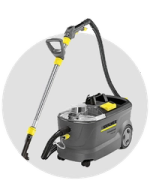
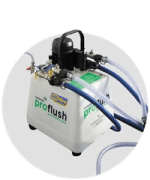
☐ A central heating flusher, if treating the whole system
☐ Gloves and safety goggles
☐ A radiator key, for bleeding once refilled
☐ A bucket for draining smaller amounts of water
You can get central heating system cleaners plus valves, stopcocks, fittings and personal protective equipment for the messier parts of the job, all in one order from HSS DIY. If your order includes several items, they could arrive separately, so please bare that in mind.
How long does it take to sort radiator sludge
Step by step: treating radiator sludge
- Confirm the diagnosis. Turn the heating on and feel each radiator top to bottom. Consistent cold at the bottom across several radiators points to system wide sludge, not just one dodgy radiator.
- Turn off the heating and let the system cool fully. Never work on a radiator or valve while the system is hot and pressurised.
- For a single radiator, close both valves, place a tray and towels underneath, then loosen the connections to remove it from the wall.
- Take the radiator outside and flush it through with a hose until the water runs clear, tipping it to dislodge sludge settled at the bottom.
- For the whole system, connect a central heating flusher across the pump, following the instructions closely, and treat each radiator in turn with the valves open one at a time.
- Add a fresh dose of central heating inhibitor once flushed, to slow down future sludge formation.
- Refit or reconnect radiators, refill the system to the correct pressure, then bleed each one to remove any air introduced during the job.
- Check every joint you disturbed for leaks, and keep an eye on the boiler pressure gauge over the next few days.
⚠️Health and safety tips
You can never be too safe when doing your own DIY jobs. Here’s some things to remember when you’re working on your radiators.
- Central heating water can be scalding hot even after the system is switched off, so let it cool fully before you start.
- Wear gloves when handling old radiator water, since it's often slightly acidic and can irritate skin.
- Keep goggles on hand if you're using chemical cleaners.
- Gas boilers are strictly off limits for DIY work. It's a legal requirement in the UK that only a Gas Safe registered engineer works on gas appliances and their connections, so if the job involves anything beyond radiators, valves and pipework, get a professional in.
Case study: three cold radiators, one flush
A three-bedroom semi has a 15-year-old boiler and radiators that had never been flushed. Three radiators were warm at the top and cold across the bottom third, one was cold across almost half its height, and the boiler had started kettling on cold mornings.
Every radiator had already been bled at least twice with no improvement. The water that came out was clear (not the usual sign people expect), and the cold patches stayed exactly where they were.
Consistent cold-at-the-bottom across multiple radiators, plus a noisy boiler, pointed to system-wide sludge rather than one faulty radiator, so a whole-house flush was the better fit than removing and hosing down radiators individually.
All four radiators heated evenly top to bottom within a day, and the kettling noise stopped once the system was back up to pressure. The one joint that had always seeped slightly was tightened while everything was already drained, avoided having to redo any of the work later.
Total cost: Around £75 — hire of the flusher for the weekend plus chemicals — against a quoted £450 for a professional power flush on the same property.
Biggest lesson: Bleeding twice with no change was the signal to stop bleeding and start looking at sludge. The checklist earlier in this guide would have flagged the fix a lot sooner.
When to call in a Gas Safe engineer instead
A single stubborn radiator is a fair DIY job for a confident homeowner.
A whole system power flush is more involved. If your boiler is older, your pipework mixes copper and steel, or you've had leaks before, it's worth getting a professional to assess the system first. Power flushing at high pressure can occasionally expose weak joints that were previously holding under lower pressure, so there's a small risk of new leaks appearing on an older system.
The guidance from Which? Trusted Traders on central heating powerflushing is a useful read before you commit to the bigger job. If in doubt, treat one or two radiators yourself and call in a professional for the full system flush.
What HSS DIY customers say
Plenty of DIYers turn to HSS DIY for jobs they've never tackled before, and it's the service we provide as much as the kit that gets mentioned most.
⭐⭐⭐⭐⭐ “Great Service and easy to use to order.” - RS
⭐⭐⭐⭐⭐ “Excellent price ,quick delivery and a friendly service.” - Alan
Frequently asked questions
Why are my radiators cold at the bottom but hot at the top?
This is the classic sign of sludge, a mix of rust and debris that sinks to the bottom of the radiator and blocks hot water from circulating through that section.
Will bleeding a radiator fix cold at the bottom?
No. Bleeding only releases trapped air, which causes the opposite pattern, cold at the top and hot at the bottom. Sludge needs flushing out, not bleeding.
How do I know if I need a power flush?
If several radiators are affected, your boiler is noisy, or bleed water looks black, a power flush is likely the better fix than treating radiators one at a time.
Can I power flush my own central heating system?
Yes, with a hired central heating flusher and the right chemicals, though it's a messy, methodical job best suited to a confident DIYer with a free day.
How often should I add central heating inhibitor?
Most manufacturers recommend checking inhibitor levels annually, and always topping up after any flush or repair that involves draining the system.
Is radiator sludge dangerous?
It's not a danger to health, but left untreated it can damage the boiler pump and heat exchanger, leading to a far more expensive repair than a flush.
Get your radiators sorted with HSS DIY
So there we have it: cold at the bottom, hot at the top, is a sludge problem, not an air one, and no amount of bleeding will shift it. Whether you tackle one troublesome radiator in the living room or hire a flusher for the whole house, sorting it properly now means a warmer home and a happier boiler for years to come.
Central heating maintenance is exactly the kind of job we love helping DIYers get stuck into. From flushers to fittings, PPE to plumbing bits, we've got what you need. Bear in mind: when making an order with multiple items, they could be delivered separately.
Buy the materials. Hire the tools. One order. All in one place.
Get DIY Happy.