

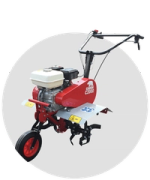










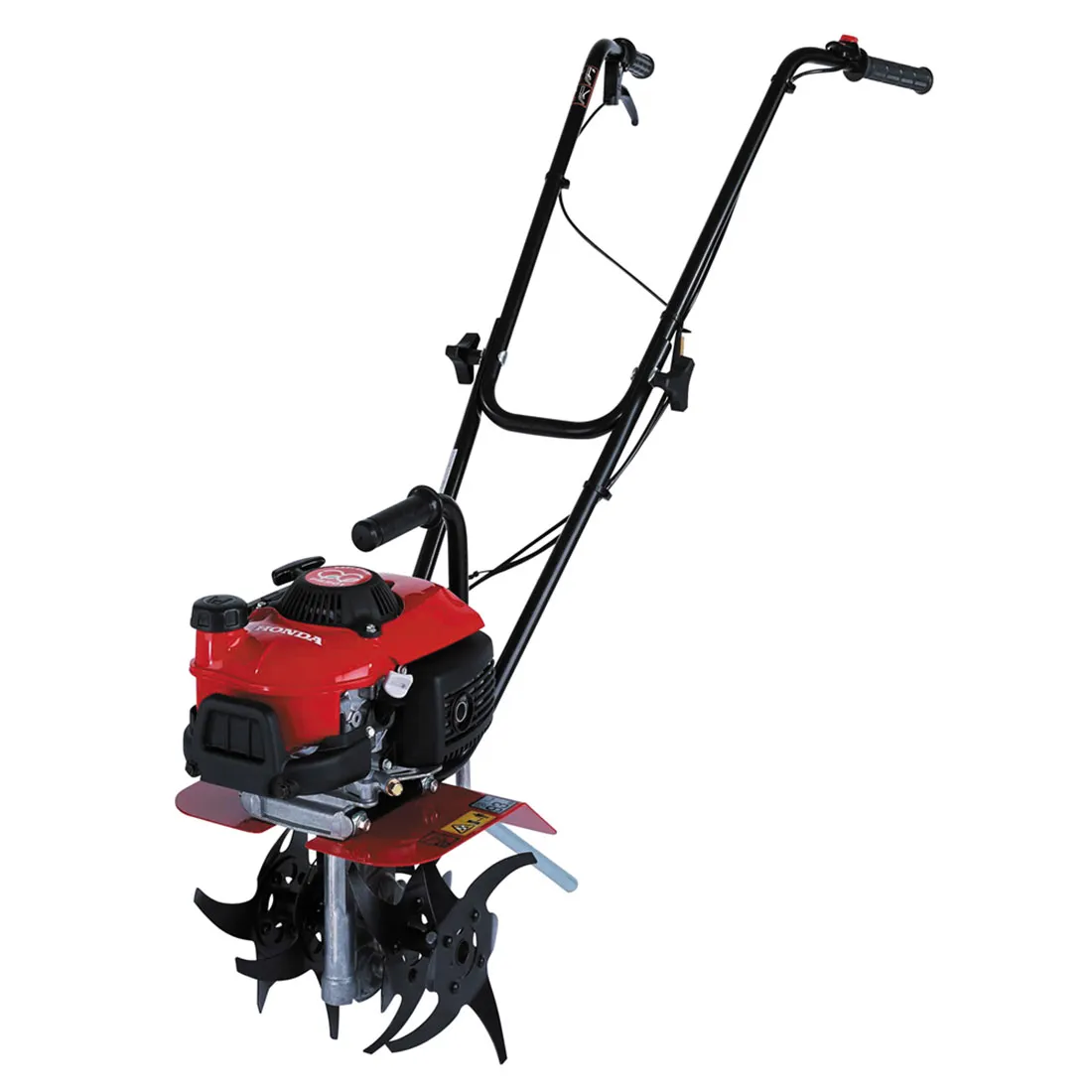
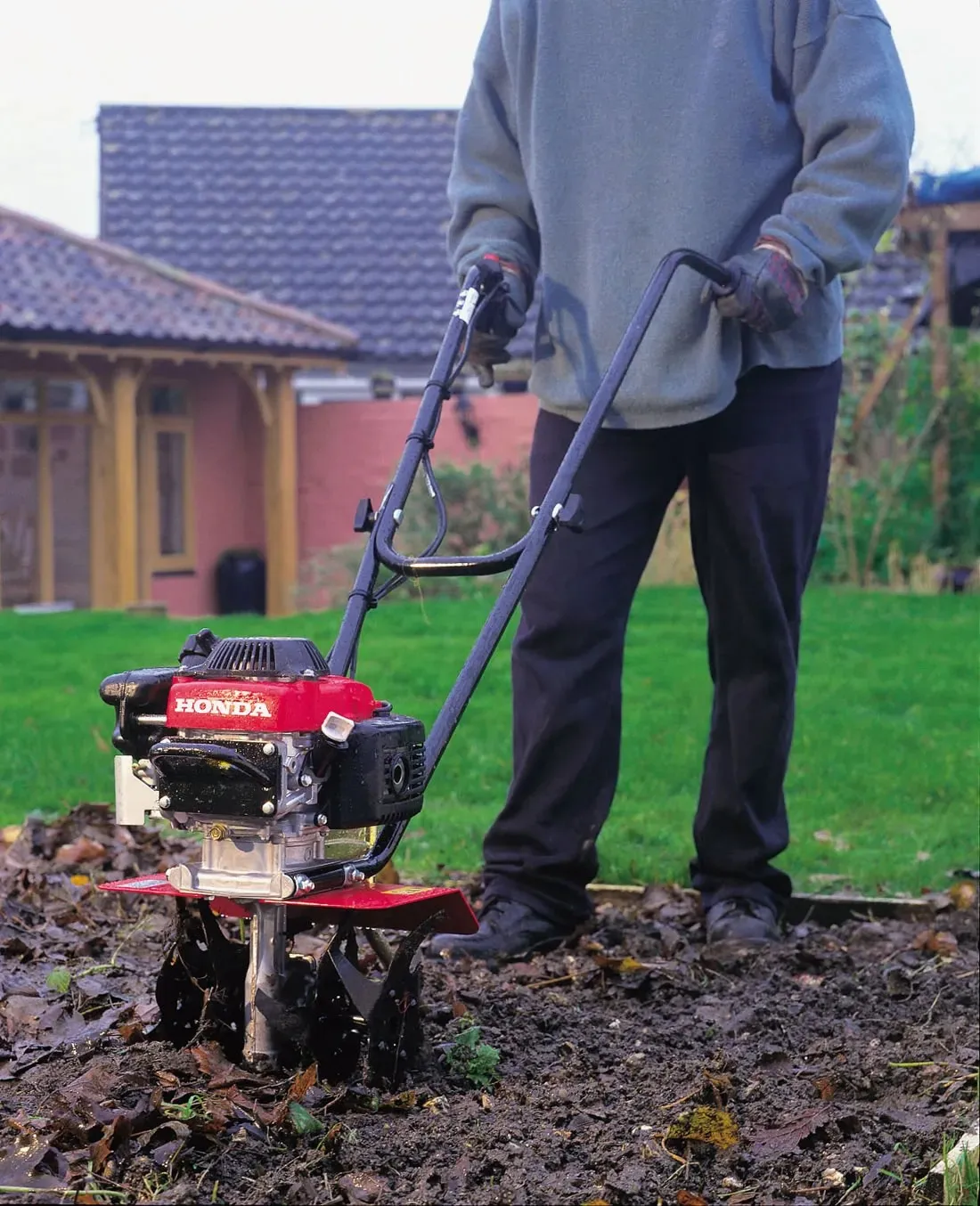
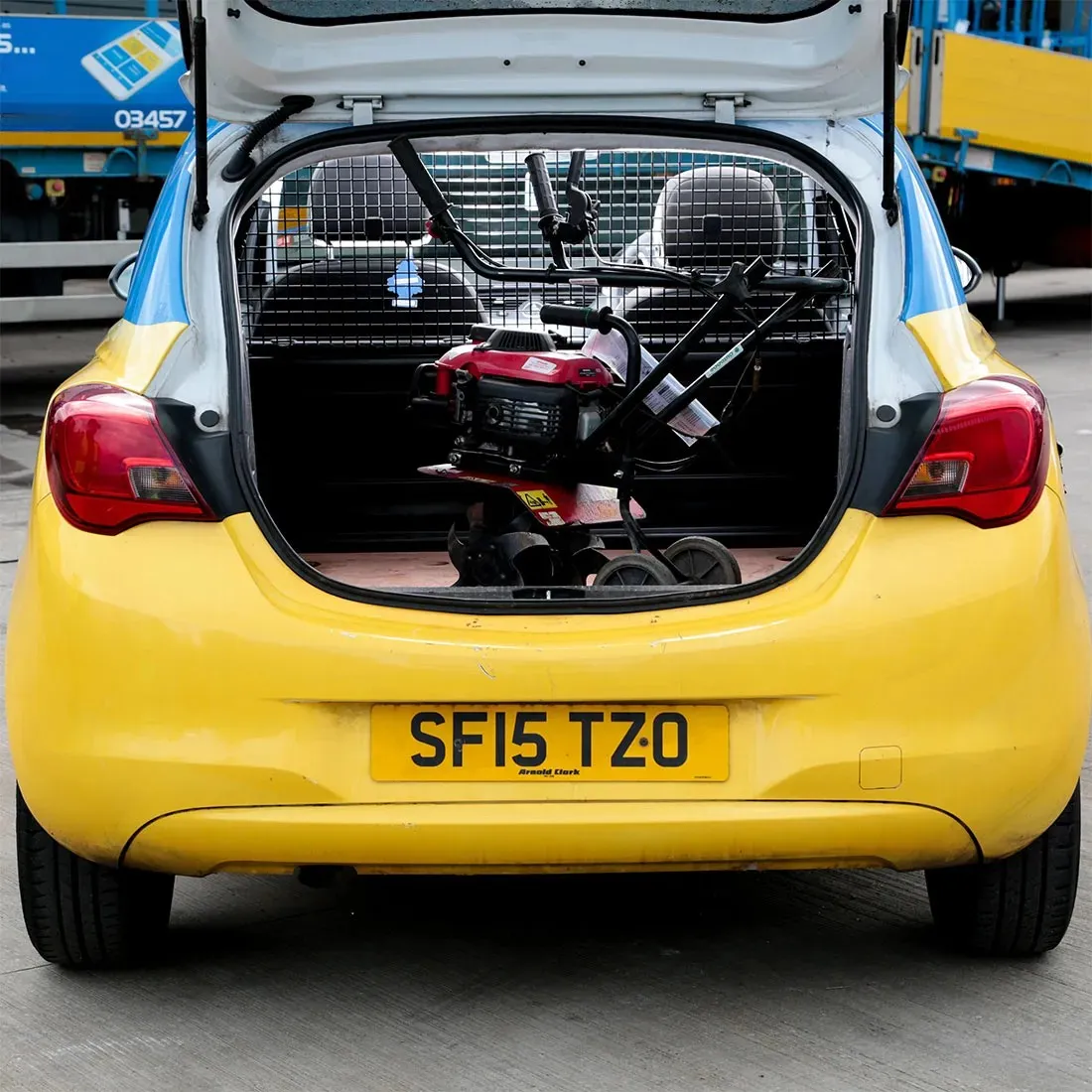
Please note: Images are for illustration purposes only. Actual product supplied may differ.
Product name: Light-Duty Garden Tiller
Product code: 62506
- Loosens, turns and aerates compacted soil while simultaneously uprooting weeds
- Compact, lightweight build allows for easier manouverability and easy user handling
- Reversible handles that also fold away allowing for easier storage and transportation
- Integrated on/off switch and accelarator lever on handgrip for maximum accessibility and convenience
- Please note - we are restricted by law from selling petrol however petrol can be purchased from a petrol station using an approved petrol storage container
- A petrol can is available to buy from HSS Hire and can be added when completing your purchase online or purchased in branch
- Engine: 2.5hp Recoil start 4 stroke
- Fuel Type: Petrol
- Height: 1m
- Length: 1.25m
- Weight: 14kg
- Width: 0.3m
You will need a vehicle at least the size of an estate car to collect this item.
We recommend you wear steel toe protection when using this product.
Protection required against high noise levels. Earplugs are suitable for short-term work.
We recommend you wear steel toe protection when using this product.
Medium vibration risk - for tools that may be used for up to 2 hours before reaching vibration Exposure Limit Value (ELV)
Gauntlets, PVC, cotton or rigger gloves are required with this item for hand protection.
We are unable to supply petrol with our equipment due to licensing restrictions. However a petrol can, can be purchased at checkout.
Light-Duty Garden Tiller
This light duty garden tiller will take the work out of maintaining small flower beds or vegetable plots, it is extremely lightweight and easy to operate.
Hire from
£78.73 £65.61 ex.VAT
Average hire period: 2 days
You have selected a 3 day hire
Product name: Light-Duty Garden Tiller
Product code: 62506
- Loosens, turns and aerates compacted soil while simultaneously uprooting weeds
- Compact, lightweight build allows for easier manouverability and easy user handling
- Reversible handles that also fold away allowing for easier storage and transportation
- Integrated on/off switch and accelarator lever on handgrip for maximum accessibility and convenience
- Please note - we are restricted by law from selling petrol however petrol can be purchased from a petrol station using an approved petrol storage container
- A petrol can is available to buy from HSS Hire and can be added when completing your purchase online or purchased in branch
- Engine: 2.5hp Recoil start 4 stroke
- Fuel Type: Petrol
- Height: 1m
- Length: 1.25m
- Weight: 14kg
- Width: 0.3m
You will need a vehicle at least the size of an estate car to collect this item.
We recommend you wear steel toe protection when using this product.
Protection required against high noise levels. Earplugs are suitable for short-term work.
We recommend you wear steel toe protection when using this product.
Medium vibration risk - for tools that may be used for up to 2 hours before reaching vibration Exposure Limit Value (ELV)
Gauntlets, PVC, cotton or rigger gloves are required with this item for hand protection.
We are unable to supply petrol with our equipment due to licensing restrictions. However a petrol can, can be purchased at checkout.
Questions
A Light-Duty Garden Tiller is used for loosening, turning, and aerating soil in flower beds, vegetable plots, and raised beds to improve drainage, reduce compaction, and create a fine, workable surface for planting. It is particularly useful at the start of the growing season to break up winter-hardened ground, between growing cycles to incorporate compost or organic matter, and on newly established garden areas where the soil has not yet been cultivated.
Yes. A Light-Duty Garden Tiller is well suited to beginners — the controls are straightforward, the machine is lightweight relative to larger cultivators, and the tine depth is easy to adjust for different soil conditions. Beginners should make an initial pass at a shallow depth to get a feel for the machine's behaviour before increasing depth, and always work in rows rather than moving randomly across the bed to maintain even coverage and consistent soil preparation.
A Light-Duty Garden Tiller breaks up compacted soil far more quickly and thoroughly than digging by hand — a bed that would take an hour with a spade can typically be prepared in a fraction of the time. The rotating tines work the soil to a consistent depth and break up clods more evenly than a fork, producing a finer tilth that is immediately ready for sowing or planting. For anyone with a recurring requirement to prepare beds each season, the reduced physical effort also significantly lowers the risk of back and shoulder strain associated with sustained manual digging.
Yes. As a Light-Duty Garden Tiller works through the soil, the rotating tines uproot annual weeds and surface-growing weed seedlings, bringing them to the surface where they can be raked off and composted. For established perennial weeds with deep root systems — such as bindweed, couch grass, or dock — the tiller will break up the roots but may not fully remove them; a follow-up hand removal of root fragments is recommended in heavily infested areas before tilling again.
Yes. The Light-Duty Garden Tiller's compact footprint and lightweight frame allow it to be turned and repositioned easily between passes, making it practical for use in narrower raised beds, between rows of established planting, and in corner areas where a larger machine would be awkward to handle. When working along a bed edge or close to an established plant, reduce the working depth and guide the tiller carefully to avoid disturbing shallow roots or damaging nearby growth.
No. A Light-Duty Garden Tiller runs on petrol and requires no mains connection or extension lead, making it fully portable and practical for use anywhere in the garden regardless of distance from a power outlet. Fill the fuel tank before starting work and check the oil level as recommended in the hire documentation to ensure the engine runs at optimal performance throughout the session.
When using a Light-Duty Garden Tiller, wear steel toe boots to protect against the rotating tines if the machine moves unexpectedly, work gloves to maintain grip on the handles and protect against vibration, and ear defenders due to the engine noise level during extended sessions. Keep all bystanders and children well clear of the working area while the tines are rotating, and never attempt to clear debris from the tines while the engine is running.
Yes. Preparing soil with a Light-Duty Garden Tiller before planting improves germination rates and root development by breaking up compaction, improving aeration, and creating a finer, more even tilth than hand digging typically produces. For seeding, aim for a particularly fine surface finish by making two passes at slightly different angles. Incorporate compost or well-rotted manure before the final pass to work it into the top layer of soil simultaneously.
Yes. The Light-Duty Garden Tiller features reversible folding handles that reduce its overall footprint significantly for transport and storage. This makes it straightforward to load into a car boot or the back of a van, and compact enough to store in a shed or garage without occupying excessive floor space between uses.
Maintenance on the Light-Duty Garden Tiller is straightforward. After each use, clean soil and plant material from the tines to prevent build-up that can unbalance the rotation, check the fuel and oil levels before the next session, and store the machine in a dry, covered space. Inspect the tines for damage or wear before use — bent or blunted tines reduce tilling effectiveness and can place additional load on the engine. Any damage should be reported at the end of the hire period.
Yes. A Light-Duty Garden Tiller is specifically designed for small gardens, raised beds, allotment plots, and compact growing areas where a full-size cultivator would be too heavy and cumbersome to manoeuvre effectively. The narrower tine width and lighter frame make it easy to guide through smaller beds without compacting the surrounding soil by treading on prepared ground, and the working depth is sufficient for typical vegetable and flower bed preparation.
Yes. Beginners can operate a Light-Duty Garden Tiller more safely by reading the operating instructions before starting, wearing the full PPE setup (steel toe boots, gloves, ear defenders), and making a first pass at a shallow tine depth to understand how the machine responds to different soil conditions. Never attempt to till over buried cables, pipes, or irrigation lines — check the area is clear before starting, particularly in established gardens where utilities or irrigation may be present just below the surface.
A Light-Duty Garden Tiller produces moderate vibration during operation, which is normal for a petrol-powered rotary cultivator working through soil. To manage vibration exposure, take regular short breaks during extended sessions, maintain a firm but relaxed grip on the handles rather than gripping tightly, and wear anti-vibration gloves for additional protection. Follow current HAVS (Hand-Arm Vibration Syndrome) guidelines on daily vibration exposure limits if using the tiller for prolonged periods.
Related products
Hire from
£78.73


