








⏱ Read time: 7 min | 🌿 Difficulty: Beginner | ⏰ Time: Half a day (4 hrs) | 👷 1 person
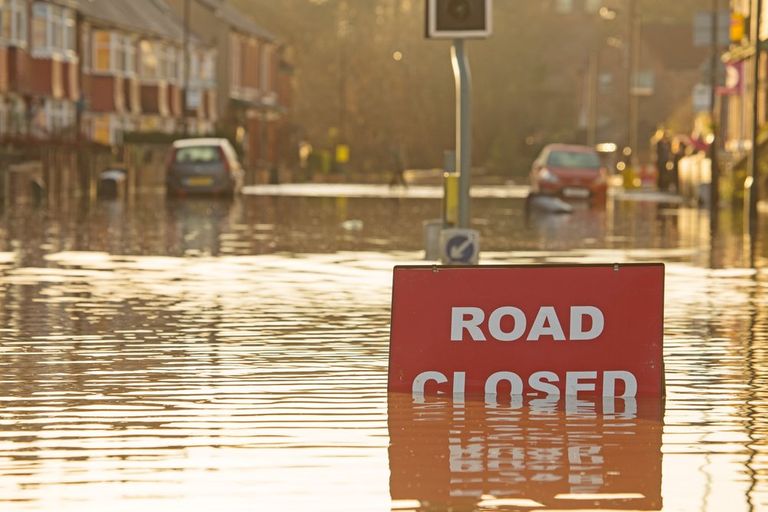
The storm has gone, the water, however, has not. But don’t worry, HSS DIY can help.
A wet and dry vacuum will clear standing water in minutes. A mop and a bad attitude will take you all afternoon. So: hire or buy? Here is the honest answer.
The Met Office has already confirmed 21 storm names for the 2026 to 2027 season, starting with Austen, Boelo and Chloe. Now is a good time to sort your kit out, rather than at 11pm in the dark with a bucket.
What does a wet and dry vacuum actually do?
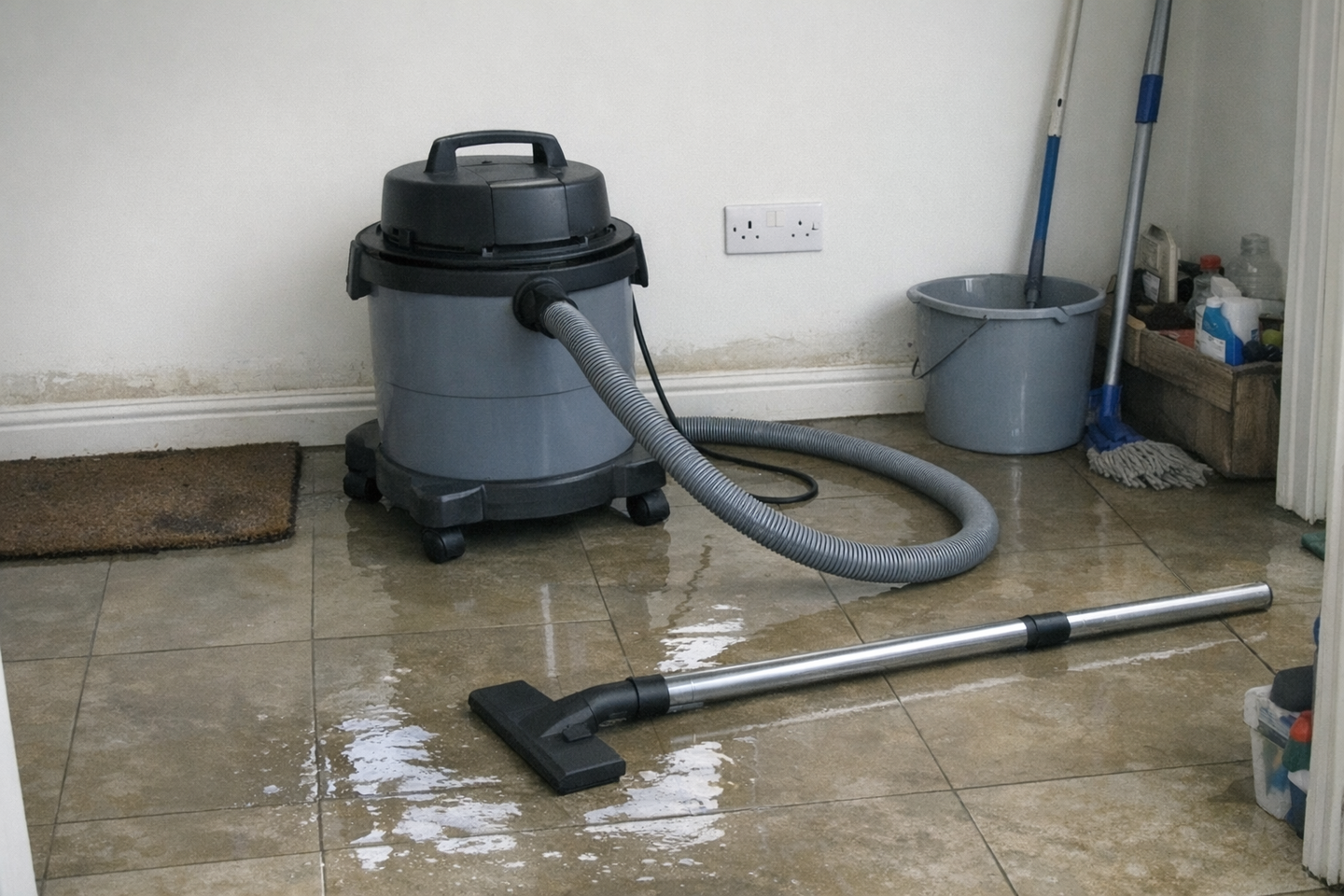
A wet and dry vacuum is a single machine that sucks up both dry debris and liquid. Instead of a paper bag it uses a sealed tank and a float mechanism, so water goes into the drum and the motor stays dry. That is what makes it the workhorse of any flood damage clean up.
What it will handle:
- Standing water on hard floors, in garages, sheds and conservatories
- Soaked carpet and underlay (it will not dry them, but it will pull out the bulk of the water)
- Wet leaves, silt and grit washed in under doors
- Blocked gullies and shallow puddles in the driveway
- Post clean-up dust and rubble once everything has dried out
What it will not handle:
- Never use a wet vac to pick up asbestos, toxic materials, fuel or any flammable liquid. If you suspect asbestos in a flooded outbuilding or garage, stop and get it assessed professionally.

Should I hire or buy a wet and dry vacuum?
Hire or buy: how the costs compare
Choosing whether to hire or buy a wet & dry vacuum depends on your circumstances. We’ve compared the both to help you make your decision easier.
Rough rule of thumb: add up what hiring would cost you over a year. If that comes to more than about half the price of a machine, buying starts to make sense. For a genuine one-off, or for more water than a 16 litre tank will hold, hire wins.
One spec difference catches people out. Our 90 litre hire unit is a 110V machine — dual motor, two speed settings, 10 metre cable, anti-static hose. It shifts serious volume, but 110V means running it through a transformer from a domestic socket. The Vac King CVAC20P we sell plugs straight into 230V mains, with 16 litres wet capacity and 12 dry, which covers a utility room or a garage with no extra kit.
Browse the full ranges here: vacuum cleaner hire and vacuums and dust extraction to buy.
How do I tackle storm clean up, step by step?
Step 1. Kill the power
Before you set foot in standing water, switch off the electricity at the consumer unit if it is safe and dry to reach. Water and electrics are a genuinely lethal combination. Electrical Safety First has clear guidance, and any flooded circuits will need a registered electrician to sign them off before you switch anything back on.
Step 2. Photograph everything
Insurers want evidence, and they want it before you tidy up. Wide shots of each room, close ups of damaged items, and a note of the high water mark on the wall.
Step 3. Shift the bulk water
If the water is deep, a submersible pump will clear it far faster than any vacuum. Once it is down to shallow puddles, the wet vac takes over.
Step 4. Vacuum, empty, repeat
Work in overlapping passes from the driest end towards the wettest, so you are not walking water back over ground you have cleared. Empty the tank well before it is full, since a brimming 90 litre drum weighs a fair bit more than most people expect.
Step 5. Clean and disinfect
Lift silt with the vacuum, scrub hard surfaces, then disinfect. Bin any porous items that soaked up flood water and cannot be properly cleaned.
Step 6. Dry it properly
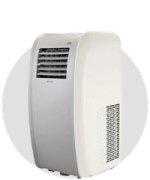
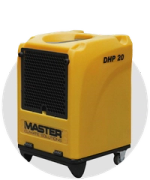
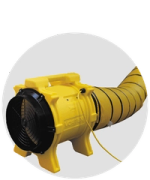
This is the step people rush. A dehumidifier or dryer pulls moisture out of plaster, timber and screed, which is where the real damage hides. Our guide to pumps, dryers and dehumidifiers walks through the airflow set up in detail.

How long does flood damage clean up take?
Flood damage clean up timelines can vary but here is how long we thing it would take, on average.
What safety kit do I need for flood damage clean up?
Dealing with a flooded floor safely takes a bit of kit — here's what you'll need before you start.
- Flood water can carry sewage, chemicals, sharps and whatever was in next door's shed. GOV.UK advice on what to do after a flood is worth reading before you start.
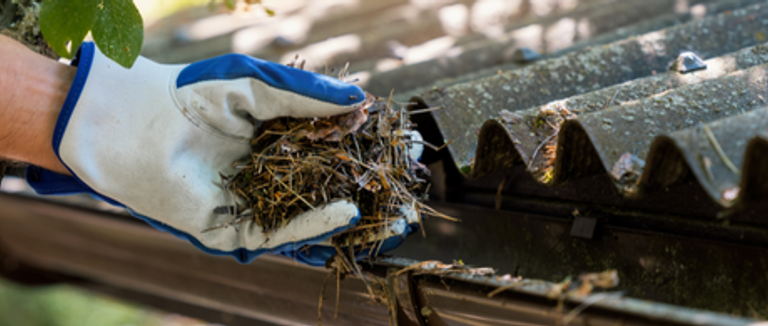
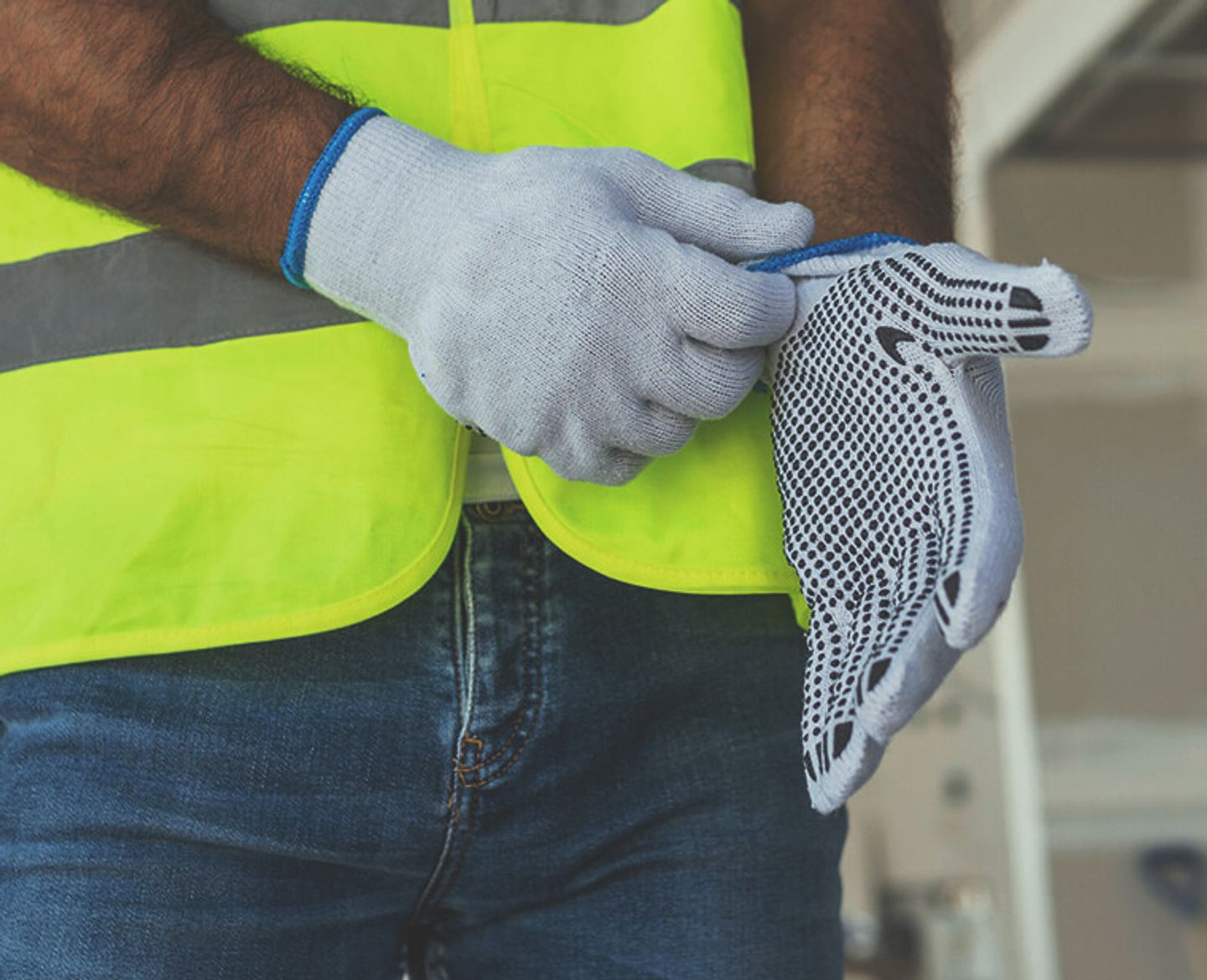
- Waterproof gloves. Bare hands in flood water is asking for trouble. See our gloves range.
- Safety wellies. Steel toe and midsole protection for hidden debris. Have a look at our workwear and safety footwear range.
- Eye protection and a face mask. Especially once things dry and silt turns to dust. Browse personal protection equipment.
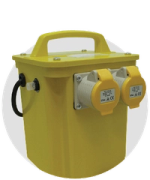
- A transformer if you are running 110V equipment from a domestic supply.
- An RCD protected extension lead, kept well clear of any water.
- Make sure you wash your hands properly every time before eating & drinking.
How many homes are at risk of flooding in England?
More than you would think. The Environment Agency's National Flood Risk Assessment, published in December 2024, put 6.3 million properties in England at risk of flooding: 4.6 million from surface water and 2.4 million from rivers and the sea. By the middle of the century that could climb to around 8 million, which works out at roughly one property in four.
Storm Babet showed what those numbers look like on the ground. In October 2023, 2,146 properties flooded across England, while flood defences held back water from an estimated 96,000 more. Most of that clean-up landed on ordinary homeowners rather than professional restoration firms.
The part that catches people out is surface water. It is the largest single category in that assessment by a wide margin, and it has nothing to do with living near a river. Blocked drains, ground already saturated from a wet fortnight, and a downpour with nowhere to go will do it. Which is why a wet and dry vacuum earns its keep in plenty of homes that have never had a flood warning in their life.
If you have had water in more than once, that is usually the point at which buying one stops being a luxury and starts being sensible insurance.
Your free storm clean-up checklist
Need some help staying on track? We’ve put together this storm clean-up checklist that you can print & stick it on the fridge or even screenshot, so you can tick off as you go.
Before the storm
☐ Check your gutters, downpipes and gullies are clear
☐ Know where your consumer unit and stopcock are
☐ Sign up for flood warnings by text, phone or email
☐ Move valuables and paperwork upstairs or off the floor
☐ Decide now whether you are hiring or buying, and book ahead if hiring
During the clean-up
☐ Power off at the consumer unit
☐ Photograph all damage for insurance
☐ Gloves, wellingtons, eye protection on
☐ Pump out standing water
☐ Wet vac the shallow water and silt
☐ Empty the tank before it is full
☐ Lift soaked carpet and underlay
☐ Clean, then disinfect all hard surfaces
☐ Bag and dispose of unsalvageable items
Drying out
☐ Set up dehumidifier and air movers for circular airflow
☐ Open cupboards, lift floorboards where you can
☐ Monitor progress weekly, do not rush the plaster
☐ Get a registered electrician to check flooded circuits
☐ Keep all receipts for your insurer
Wet & dry vacuum FAQ’s
Can I use a normal vacuum to clean up flood water?
No, and please don’t try. Household vacuums have no sealed tank or float system, so water reaches the motor. You risk destroying the machine and giving yourself an electric shock. Only a wet and dry vacuum is built for liquid.
How much water can a wet and dry vacuum handle?
It’ll depend on the model you choose. Our models can handle anything from 16 litres to 90/110 litres. Check the specs on the wet & dry vacuum product pages to see which one suits your needs.
Is it cheaper to hire or buy a wet and dry vacuum?
For a one off flood, wet vac hire is almost always cheaper, and you get a larger machine than you would buy for the same money. If you expect to use it three or more times, buying usually wins. Compare the live hire rate against the purchase price before you commit.
Do I need a transformer for a wet vac?
Only for 110V equipment, including our 90 litre hire unit. The wet and dry vacuums we sell run on standard 230V mains, so they plug straight into a domestic socket.
Can a wet and dry vacuum dry out my carpet?
It will pull out most of the water, which is a big head start, but it will not dry the carpet, underlay or the floor beneath. For that you need a dehumidifier and air movement, running for days rather than hours.
How quickly can I get one delivered?
We offer free next day delivery. If your order contains several items, they may arrive separately, so do not panic if the vacuum turns up before the gloves.
Hire or buy a wet & dry vacuum with HSS DIY
So there you go!
There are always going to be pros and cons when it comes to hiring and buying but it all boils down to what’s best in the long run.
If you don’t get regular flooding, hiring seems like the best option. If you live somewhere that floods more than once, buy a smaller wet vac and keep it in the garage, because the next storm on the Met Office list will not send a warning card in the post.
Either way, do not skip the drying stage and do not skip the gloves. Get those two right and a flooded floor becomes a weekend job rather than a six month renovation.
Whether you’re hiring or buying a wet & dry vacuum, HSS DIY are here to support you through the whole job.
If you have any questions or queries, get in touch with our live chat team, who are always on hand & happy to help.
Get DIY Happy with The Home of Great Projects.