


Please note: Images are for illustration purposes only. Actual product supplied may differ.
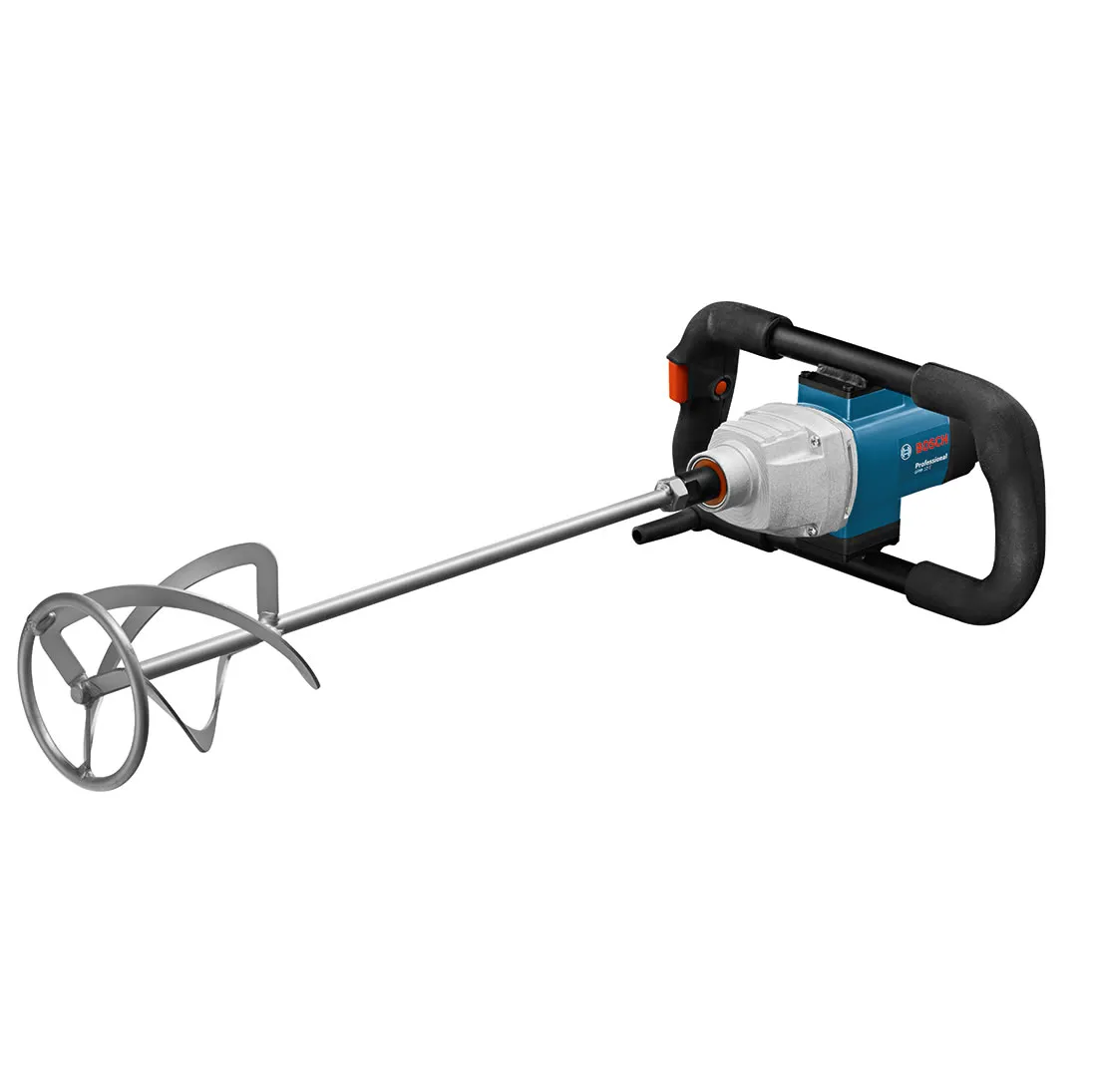
Product name: Paddle Mixing Drill 110V
Product code: 61211
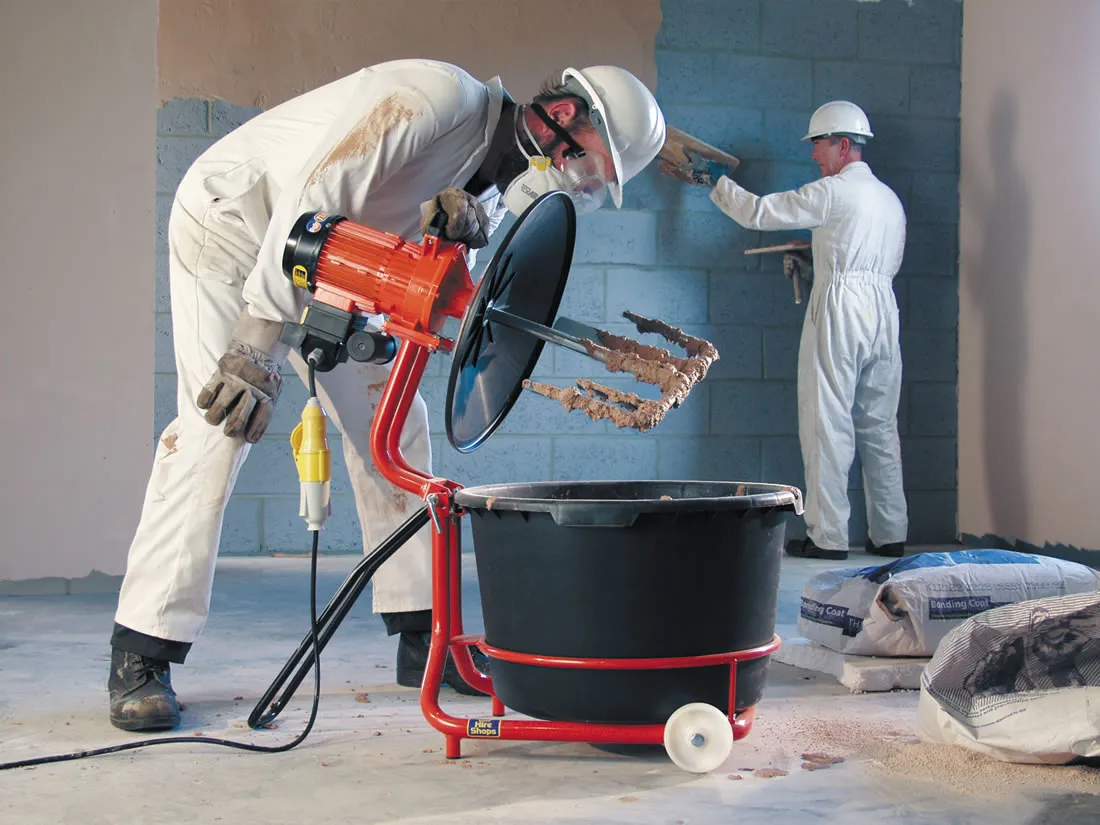
Faster and more efficient than doing the job by hand, it's also ideal for mixing small quantities of plaster.
For more tips on painting and decorating your home visit our blog.
- One speed stirrer for mixing thin and viscous materials
- Electronic switch for continuously varied speed adjustment
- For use with stirrer baskets up to 140mm in diameter
- Ergonomic frame handle for user comfort
- Brand: Bosch
- Height: 0.245m
- Length: 0.66m
- Power Output: 1200W
- Voltage: 110V
- Weight: 5.3kg
- Width: 0.392m
We recommend you wear steel toe protection when using this product.
Protection required against high noise levels. Earplugs are suitable for short-term work.
We recommend you wear steel toe protection when using this product.
Gauntlets, PVC, cotton or rigger gloves are required with this item for hand protection.
Residual Current Devices protect form electric shock. Strongly recommended for electrical equipment used outdoors or in damp conditions.
You will need a vehicle at least the size of an estate car to collect this item.
Paddle Mixing Drill 110V
Mixing paints, textured finishes and resins in bulk can be a real chore but not with this powerful electric mixer.
Hire from
£105.16 £87.63 ex.VAT
Average hire period: 4 days
You have selected a 4 day hire
Product name: Paddle Mixing Drill 110V
Product code: 61211
Faster and more efficient than doing the job by hand, it's also ideal for mixing small quantities of plaster.
For more tips on painting and decorating your home visit our blog.
- One speed stirrer for mixing thin and viscous materials
- Electronic switch for continuously varied speed adjustment
- For use with stirrer baskets up to 140mm in diameter
- Ergonomic frame handle for user comfort
- Brand: Bosch
- Height: 0.245m
- Length: 0.66m
- Power Output: 1200W
- Voltage: 110V
- Weight: 5.3kg
- Width: 0.392m
We recommend you wear steel toe protection when using this product.
Protection required against high noise levels. Earplugs are suitable for short-term work.
We recommend you wear steel toe protection when using this product.
Gauntlets, PVC, cotton or rigger gloves are required with this item for hand protection.
Residual Current Devices protect form electric shock. Strongly recommended for electrical equipment used outdoors or in damp conditions.
You will need a vehicle at least the size of an estate car to collect this item.
Questions
A Paddle Mixing Drill is used to mix paints, plasters, adhesives, tile grout, resins, cement, and other thick or textured materials to a smooth, consistent blend quickly and without the effort of manual mixing. It is used across painting and decorating, plastering, tiling, and construction applications where a uniform mix is critical to the finish quality — lumps or air bubbles introduced by hand mixing are eliminated by the Paddle Mixing Drill's rotating paddle action.
A Paddle Mixing Drill produces a significantly smoother, more consistent result than hand mixing — the high-speed paddle action fully incorporates pigment, binder, and water into a uniform blend that is difficult to achieve manually in large volumes. For materials such as plaster, tile adhesive, or resin where consistency directly affects the finished surface quality, the Paddle Mixing Drill reduces the risk of uneven colour, weak spots, or setting failures caused by incomplete mixing.
Yes. A Paddle Mixing Drill handles plaster, cement, and mortar effectively, making it well suited to DIY patching, repair work, and small screeding jobs. For dense mixes such as floor leveller or heavy-duty mortar, add the powder to water (not the other way round) and mix at a lower speed first to prevent the dry material from climbing the paddle shaft, then increase speed to achieve a smooth, lump-free consistency.
Yes. A Paddle Mixing Drill is ideal for blending large volumes of paint, primers, and coatings before application — particularly useful for trade tins that have been stored and settled, or for blending tinted paints from multiple containers to ensure colour consistency across a job. Use a lower speed setting for thinner paints to avoid splashing, and increase speed for thicker masonry or textured coatings.
Yes. A Paddle Mixing Drill is accessible for beginners — the variable speed trigger allows the operator to start at a low speed to bring the paddle up to the material surface gradually before increasing speed, which prevents splashing and helps maintain control. Beginners should hold the Paddle Mixing Drill firmly with both hands, keep the paddle fully submerged in the material while mixing, and never lift the running paddle out of the mix as this will throw material across the work area.
A Paddle Mixing Drill handles a broad range of materials from thin liquids such as paint and primers through to thick, heavy-bodied materials including tile adhesive, plaster, cement, floor leveller, resin, epoxy, and textured coatings. The variable speed control allows the mixing speed to be matched to the material viscosity — slower for thinner liquids to avoid splashing, faster for dense compounds that require more energy to blend thoroughly.
The variable speed control on a Paddle Mixing Drill allows the mixing speed to be precisely matched to the material being blended. Lower speeds are used for thin liquids such as paint to prevent splashing and overworking, while higher speeds are applied to dense compounds such as plaster, mortar, or tile adhesive that require more energy to achieve a smooth, homogeneous mix. Starting at low speed and increasing gradually also reduces wear on the paddle motor when beginning a new batch of heavy material.
No. A Paddle Mixing Drill comes ready to use with a compatible paddle already fitted. Additional paddle types can be fitted to suit specific applications — a flat mixing paddle suits paints and thin liquids, while a spiral or cage paddle is more effective for dense compounds such as plaster or adhesive. Ensure any replacement paddle is securely locked into the chuck before use and is rated for the speed range of the Paddle Mixing Drill.
Yes. The Paddle Mixing Drill features a wrap-around ergonomic handle that provides a secure, comfortable grip and distributes the torque reaction across the operator's hand rather than concentrating it at the wrist. For extended mixing sessions, use both hands on the handle positions provided, take regular short breaks, and keep the paddle fully submerged to reduce the torque load on the motor and the operator. The Paddle Mixing Drill's variable speed also allows a lower, more controlled speed to be used on less viscous materials, which further reduces fatigue.
Yes, but when using it outdoors or in damp conditions, it’s strongly recommended to connect it through a Residual Current Device (RCD) for electrical safety.
After use, remove the paddle from the Paddle Mixing Drill chuck and clean it immediately — materials such as plaster, cement, and adhesive harden quickly and become very difficult to remove once set. Rinse the paddle with clean water for water-based materials, or use an appropriate solvent for resin or epoxy. Wipe the chuck area and drill body clean and dry before storing. Never immerse the motor housing of the Paddle Mixing Drill in water.
Yes. A Paddle Mixing Drill is built to a specification suitable for enthusiastic DIYers, trade and professional use — the motor, gearing, and housing are designed to withstand the sustained load of repeated heavy mixing jobs across a working day. Professionals in plastering, tiling, decorating, and construction regularly use a Paddle Mixing Drill as a primary tool for batch preparation, and the variable speed control and ergonomic design support extended daily use without excessive fatigue.
Yes. A Paddle Mixing Drill is well suited to mixing resin and epoxy components, where thorough and even blending of part A and part B is essential to achieving a correct chemical cure. Mix at a moderate speed to avoid introducing air bubbles, which can cause surface voids and weak spots in the cured material. Use a clean, dry paddle for resin work — any water contamination from a previously cleaned paddle can interfere with the cure chemistry of moisture-sensitive resins.
A Paddle Mixing Drill produces moderate noise during operation, consistent with other mains-powered rotary tools. For short mixing sessions this is manageable, but ear protection is recommended for extended or repeated mixing work during a single day to prevent cumulative hearing fatigue. The noise level also increases when mixing dense materials at higher speeds, so using the lowest effective speed setting for the material also reduces noise exposure.
Yes. When using a Paddle Mixing Drill, wear chemical-resistant gloves to protect against skin contact with wet cement, plaster, adhesive, or resin — prolonged skin contact with these materials can cause irritation or chemical burns. Safety goggles protect against splashing, particularly when starting the mix at speed or when mixing near the top of a bucket. Ear protection is recommended for extended mixing sessions due to motor noise, and steel toe boots protect against dropped buckets or containers.
Related products
Hire from
£105.16


