









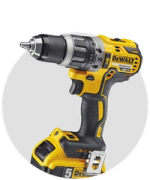

Please note: Images are for illustration purposes only. Actual product supplied may differ.
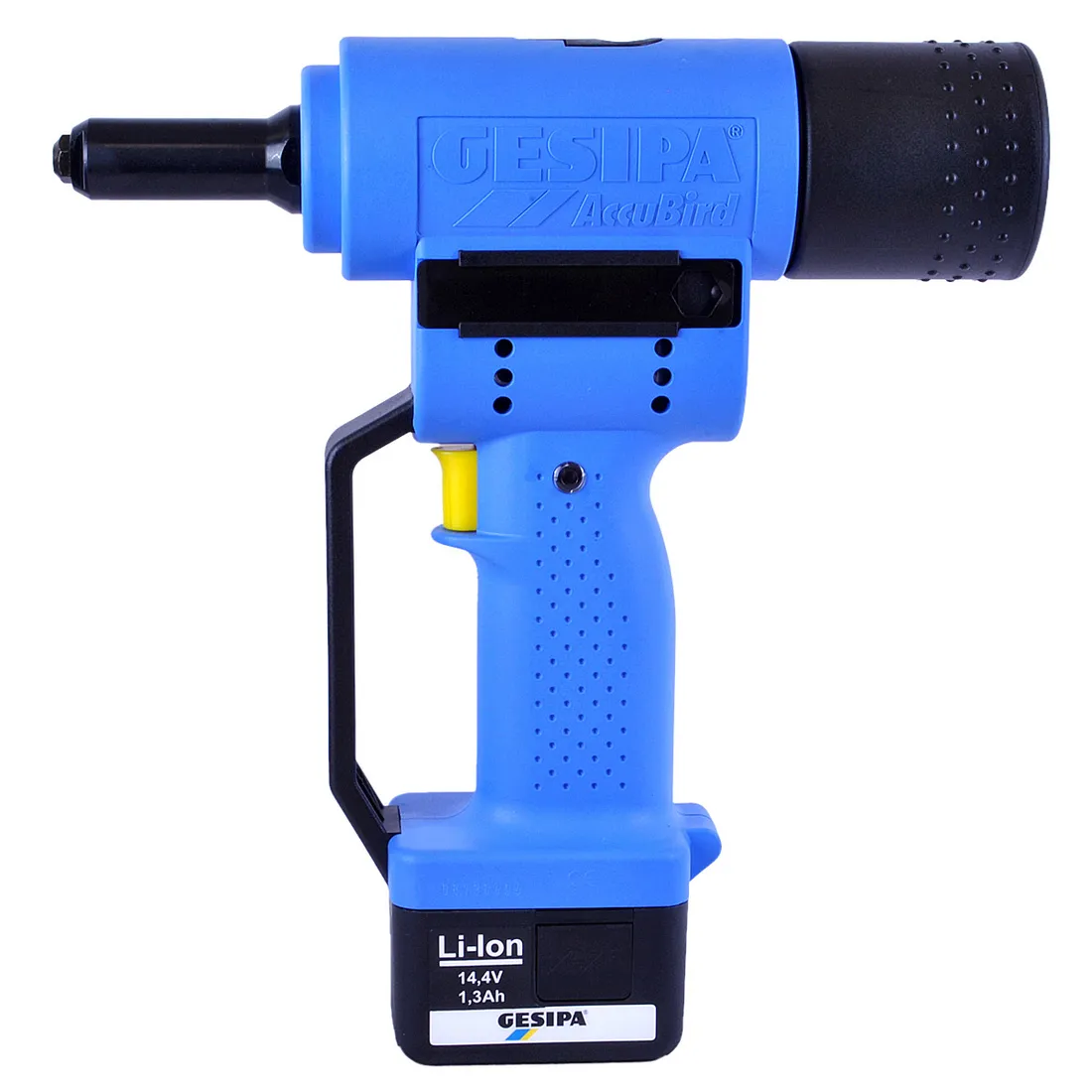
Product name: Cordless Riveter
Product code: 67613
- Rivets available for sale
- Maximum Rivet Size: 5mm
- Power Supply: Battery
- Voltage: 14.4v
- Weight: 2.2kg
Gauntlets, PVC, cotton or rigger gloves are required with this item for hand protection.
Medium vibration risk - for tools that may be used for up to 2 hours before reaching vibration Exposure Limit Value (ELV)
Gauntlets, PVC, cotton or rigger gloves are required with this item for hand protection.
Cordless Riveter
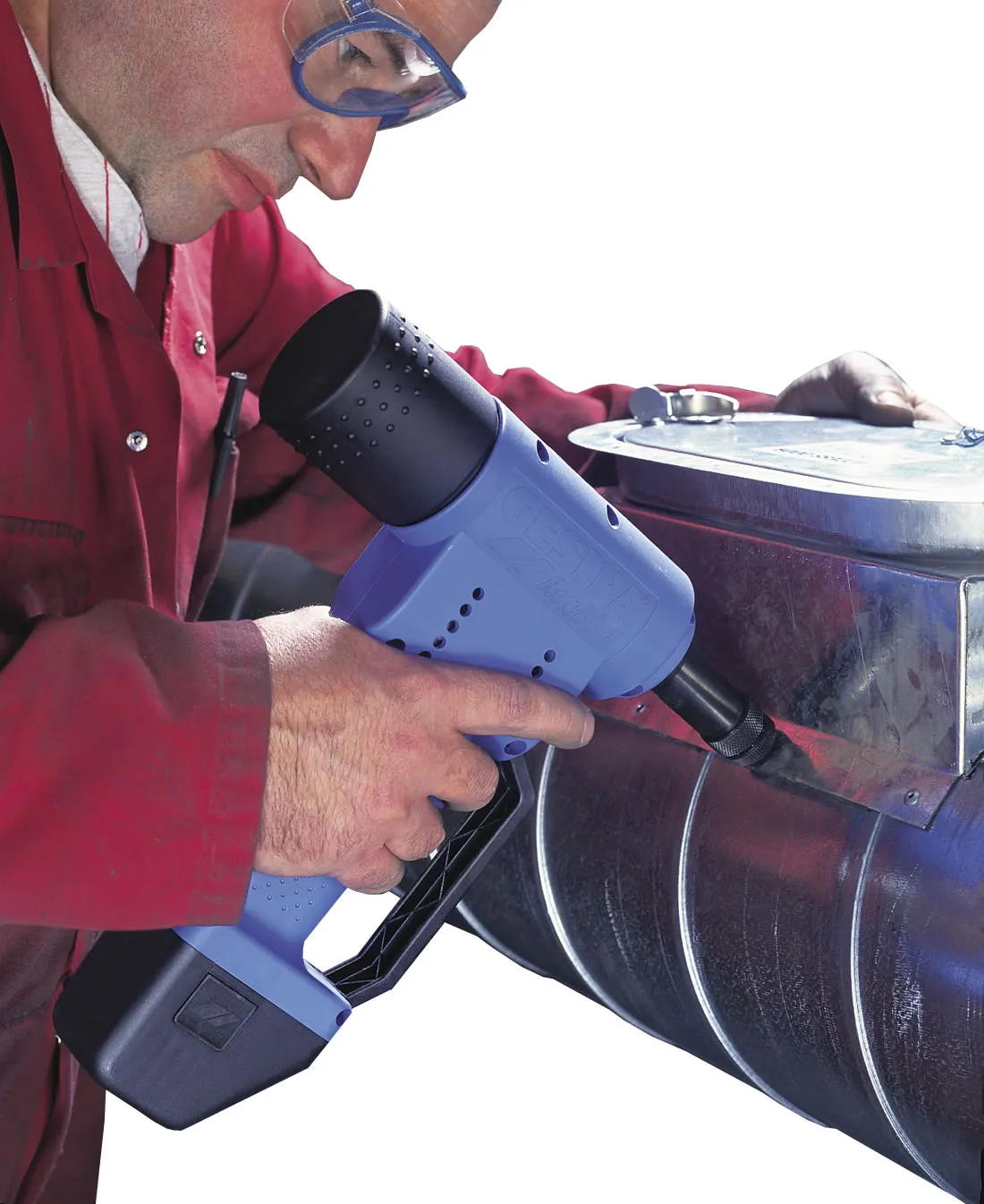
Ideal for heating and ventilating engineers, ductwork and metalwork fabricators this cordless riveter is perfect for repetitive fixing work.
Hire from
£83.59 £69.66 ex.VAT
Average hire period: 4 days
You have selected a 4 day hire
Product name: Cordless Riveter
Product code: 67613
- Rivets available for sale
- Maximum Rivet Size: 5mm
- Power Supply: Battery
- Voltage: 14.4v
- Weight: 2.2kg
Gauntlets, PVC, cotton or rigger gloves are required with this item for hand protection.
Medium vibration risk - for tools that may be used for up to 2 hours before reaching vibration Exposure Limit Value (ELV)
Gauntlets, PVC, cotton or rigger gloves are required with this item for hand protection.
Questions
A Cordless Riveter is used for setting pop rivets into metal, plastic, fibreglass, and other sheet materials to create strong, permanent mechanical fastenings. It is used across a wide range of applications including sheet metal fabrication, ducting, guttering repair, bracket and frame assembly, automotive bodywork, and structural panel joining — anywhere a fast, flush-finish permanent fixing is required without access to both sides of the joint.
Yes. A Cordless Riveter is one of the more accessible powered fastening tools for beginners — the trigger operation is straightforward, the rivet-setting process is consistent, and there are no complex settings to configure before use. Load the correct rivet size for the material thickness, drill the hole to the correct diameter, insert the rivet, and pull the trigger. The cordless format also removes the cable management challenge that can complicate use in confined or overhead positions.
A Cordless Riveter eliminates the hand squeeze required on a manual pop rivet tool, which on larger jobs causes significant fatigue and slower working pace. The motorised pulling mechanism sets each rivet in a single trigger pull with consistent force — reducing the chance of a partially set or deformed rivet and producing a more uniform finish across multiple fixings. On jobs involving dozens or hundreds of rivets, the productivity and fatigue advantage over a manual riveter is substantial.
Yes. A Cordless Riveter is well suited to metalworking applications including HVAC ducting assembly, steel bracket fabrication, frame construction, equipment guarding, and sheet metal panel joining. It handles aluminium, steel, and stainless steel rivets across a range of diameters, making it a versatile fastening tool for both light fabrication and heavier structural assembly work.
Yes. A Cordless Riveter is particularly well suited to repetitive rivet fixing because the battery-powered mechanism delivers the same pulling force on every rivet, regardless of how many have already been set. This consistency is difficult to maintain with a manual tool as operator fatigue sets in — on longer runs of fixings, the Cordless Riveter produces a more even result and significantly reduces the time per fixing.
No. A Cordless Riveter is battery-powered and requires no mains connection or extension lead. This makes it fully portable and practical for use anywhere — on scaffolding, in roof spaces, in the field, or in locations without an available power socket. Charge the battery fully before starting and carry a spare if the job involves a high volume of rivets.
When using a Cordless Riveter, wear work gloves to protect against sharp sheet metal edges and the spent rivet mandrel that ejects from the tool after each fixing. Eye protection is essential — the mandrel is ejected at speed and can cause serious eye injury if it strikes unprotected. When working overhead, position yourself to the side of the ejection direction and clear the work area of bystanders before setting rivets.
Yes. Beginners can operate a Cordless Riveter more confidently by following the setup steps carefully — ensure the correct nosepiece is fitted for the rivet diameter, drill the hole to exactly the correct size (an oversized hole will produce a loose, ineffective fixing), and keep eye protection on at all times to guard against the ejected mandrel. Do not attempt to set a rivet with the tool at an angle to the material — the pull should always be perpendicular to the joint surface.
Yes, its compact, handheld design makes it easy to use in confined areas where manual tools may be awkward.
Yes. A Cordless Riveter is a useful addition to any home DIY toolkit for tasks including repairing metal gates, assembling racking and shelving units, fixing guttering brackets, joining lightweight steel or aluminium sections, and carrying out bodywork repairs. Pop rivets produce a cleaner, more permanent finish than screws on many panel applications and don't require access to both sides of the joint.
Maintenance on a Cordless Riveter is minimal. After use, clear any spent mandrel fragments from the mandrel collection chamber (these accumulate and can eventually jam the mechanism), wipe the nosepiece clean of any swarf or debris, and store the tool with the battery charged to approximately 50–60% for longer storage periods. Check the nosepiece for wear before each hire session — a worn or damaged nosepiece will produce inconsistent rivets.
A Cordless Riveter handles a range of rivet diameters and is suitable for joining thin to moderate gauge metal sections typical of DIY and light trade applications — including 1–3mm sheet steel and aluminium, plastic panels, and fibreglass. For heavier structural joining beyond the tool's rated rivet size, a heavy-duty pneumatic or hydraulic riveter is the more appropriate choice. Always check the hire documentation for the maximum rivet diameter and grip range before selecting rivet sizes for the job.
A Cordless Riveter speeds up fabrication work significantly compared to manual alternatives by setting each rivet in a single trigger operation with consistent force. The cordless format means the tool can be used anywhere on the fabrication bench or jig without cable management, and the battery runtime typically covers extended sessions without interruption. For high-volume production work, the combination of speed, consistency, and portability makes a Cordless Riveter a more productive choice than a hand tool.
Related products
Hire from
£83.59


