


⏱ Read time: 8 min | 🟢 Difficulty: Beginner to intermediate | ⏰ Time: 1 hr to 1 day (8 hrs) per job | 👷 1 to 2 people
Quick answer: Low level access equipment includes podium steps, podium towers and push-around powered access platforms. Each one gives you a steady, guarded platform for jobs up to about 5m. You’ll have both hands free, so work at height is safer and quicker. It’s ideal for Christmas decorating, painting ceilings, fitting coving or curtain poles, changing high light fittings and more.
Key takeaways
- Low level access beats a stepladder for any job that needs both hands free.
- Podium towers suit standard rooms. Powered access suits high ceilings and garages.
- Powered platforms weigh over 300kg, so check floors and doorways first.
- For a few jobs a year, low level access hire costs a fraction of buying.
In this guide
- What is low level access?
- Which equipment is right for your job?
- What jobs can I do with low level access equipment?
- Where can I use low level access equipment?
- Is it cheaper to hire or buy?
- How do I stay safe?
- Project timeline and checklist
- FAQs
What is low level access?
Low level access is equipment that lifts you a short way off the floor onto a platform with guardrails. It sits between a stepladder and a full scaffold tower.
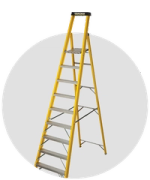
- Podium steps and podium towers: lightweight, non-powered platforms on lockable wheels.
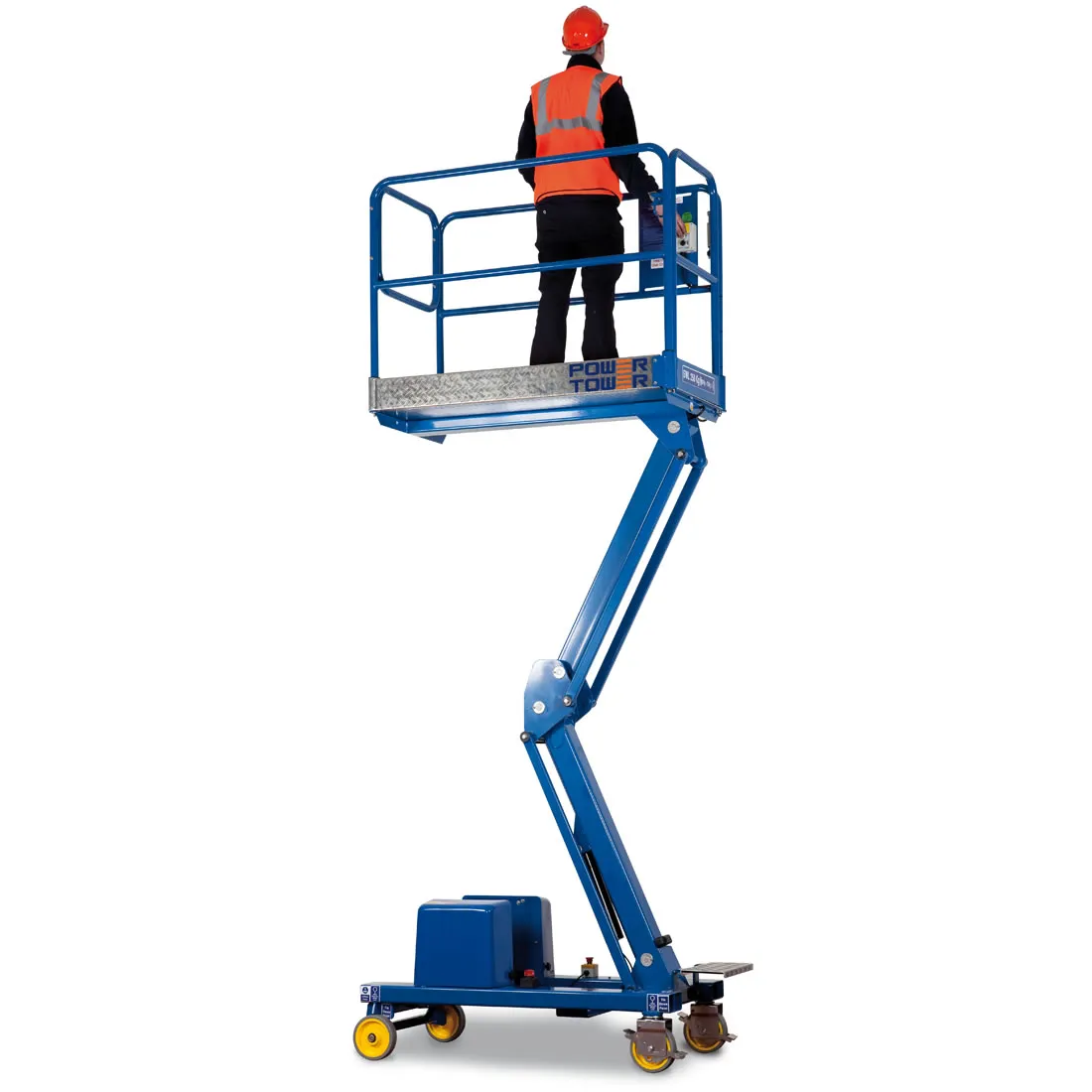
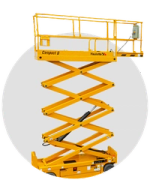
- Powered access platforms: battery-powered machines that raise you at the push of a button. Push-around models, like the Power Tower, are wheeled into place by hand.
Your working height is the platform height plus 2m, roughly how high an average adult can reach. RoSPA says falls are the single biggest cause of accidental injuries at home, and HSE says ladders "should not automatically be your first choice". Never opt to do any jobs on chairs! Keep those for sitting on.
Which low level access equipment is right for your job?
Most home jobs need a podium tower but when the ceiling is higher than a standard room, go powered.
The table below compares our most popular low level access hire options, using specs from each product page.

What jobs can I do with low level access equipment?
You can do almost any indoor job up to about 5m with low level access equipment. Here are 7 jobs made easier with low level access, picked for the time of year when most of us are working indoors.
1.Putting up Christmas decorations in high spaces
🟠 Intermediate | ⏰ Time: 4 to 8 hrs (half to 1 day) per site | 👷👷 2 man
Best kit: Power Tower or Pro IQ10 Pop Up. For long runs across a big floor, the Self-Propelled Low Level Platform.
Why low level access helps:
- No ladder shuffling. Push or drive the platform along a run of garland instead of climbing down every metre.
- Room for kit. The platform holds you, your tools and a box of decorations.
- Quiet and clean. Battery-powered machines give off no fumes, which suits shops, hotels and offices.
- Back down in January. The same machine handles the takedown.
How to do it:
- Test the lights and plan the layout on the ground, then agree an out-of-hours slot with the building manager.
- Set up barriers, lock the wheels and close the guardrail. Keep hooks and clips in a tub on the platform.
- Work zone by zone, and lower push-around platforms before every move.
Atrium higher than 5m? You’ll need a bigger machine. Our scissor lift hire guide helps you choose.
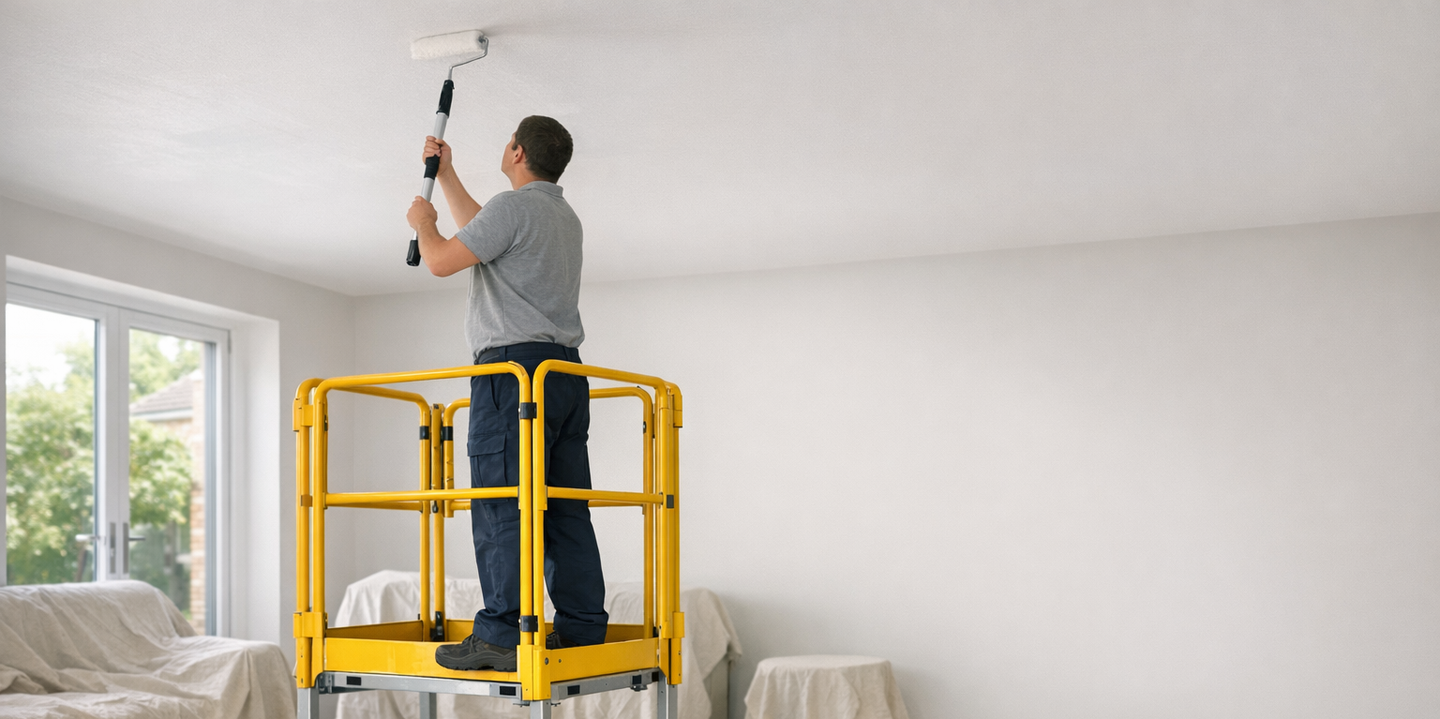
2.Painting a ceiling
Roll a strip, wheel the tower along, repeat. Fewer missed patches and a much happier neck.
🟢 Beginner | ⏰ Time: 1 day (8 hrs) including drying | 👷 1 person
Best kit: 1.25m Podium Tower, plus rollers and paint from our decorating range.
How to do it:
- Clear the room, lay dust sheets and mask the tops of the walls.
- Cut in around the edges and light fittings with a brush, then roll in strips, keeping a wet edge to avoid tide marks.
- Wheel the tower along after each strip rather than stretching. Leave the first coat to dry for the time on the tin before the second.
3.Fitting coving and a ceiling rose
Coving needs holding while the adhesive grabs. A podium tower keeps you steady at the right height.
🟠 Intermediate | ⏰ Time: 1 day (8 hrs) | 👷👷 2 people
Best kit: 1.25m Podium Tower, plus Boss Podium Steps for your helper.
How to do it:
- Measure each wall and cut the mitred corners on the ground with a mitre box.
- Mark guide lines on the wall and ceiling, apply adhesive and press each length into place while your helper supports the far end.
- Fill the joints and corners, then wipe off excess adhesive with a damp sponge before it sets.
4.Changing a light fitting in a high or vaulted ceiling
A powered platform lifts you smoothly to the fitting with both hands free for the wiring.
🟠 Intermediate | ⏰ Time: 1 to 2 hrs | 👷 1 person
Best kit: Pro IQ10 Pop Up or Power Tower.
How to do it:
- Switch off the lighting circuit at the consumer unit and check it is dead with a voltage tester.
- Raise the platform so the fitting is comfortably within reach, then photograph the existing wiring before you disconnect it.
- Connect the new light following the manufacturer’s instructions, restore the power and test it.
Electrics and the law: In England, new circuits, a new consumer unit, or adding to or altering circuits in a bathroom must be notified under Part P. Electrical Safety First explains when you need a registered electrician. Our fuse box guide is a handy refresher.
5.Hanging curtain poles and blinds on tall windows
Stand squarely on a platform, drill in hand, to reach the top of patio doors and tall sash windows.
🟢 Beginner | ⏰ Time: 1 to 2 hrs | 👷👷 2 people
Best kit: 1.25m Podium Tower or Boss Podium Steps.
How to do it:
- Mark the bracket positions with a spirit level, so the pole sits straight even if your window frame doesn’t.
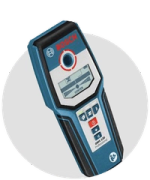
- Check for hidden cables and pipes with a detector, then drill, plug and fix the brackets using fixings suited to your wall.
- With your helper on podium steps at the other end, lift the pole into place and tighten the brackets.
6.Wallpapering a tall feature wall
Long drops in a double-height room need steady footing and two free hands to smooth the top of each one.
🟠 Intermediate | ⏰ Time: 1 day (8 hrs) | 👷👷 2 people
Best kit: Power Tower, plus wallpapering tools. See our decorating project guide too.
How to do it:
- Fill and sand the wall, then mark a plumb line for your first drop.
- One person pastes the drops on a pasting table while the other hangs each one from the top, smoothing out bubbles as they go.
- Trim at the ceiling and skirting, then lower the platform, move it along and line up the pattern for the next drop.
7.Garage makeover: LED lighting and overhead storage
A flat concrete garage floor is ideal for powered access, making ceiling racks and batten lights a quick job.
🟠 Intermediate | ⏰ Time: 1 day (8 hrs) | 👷👷 2 people
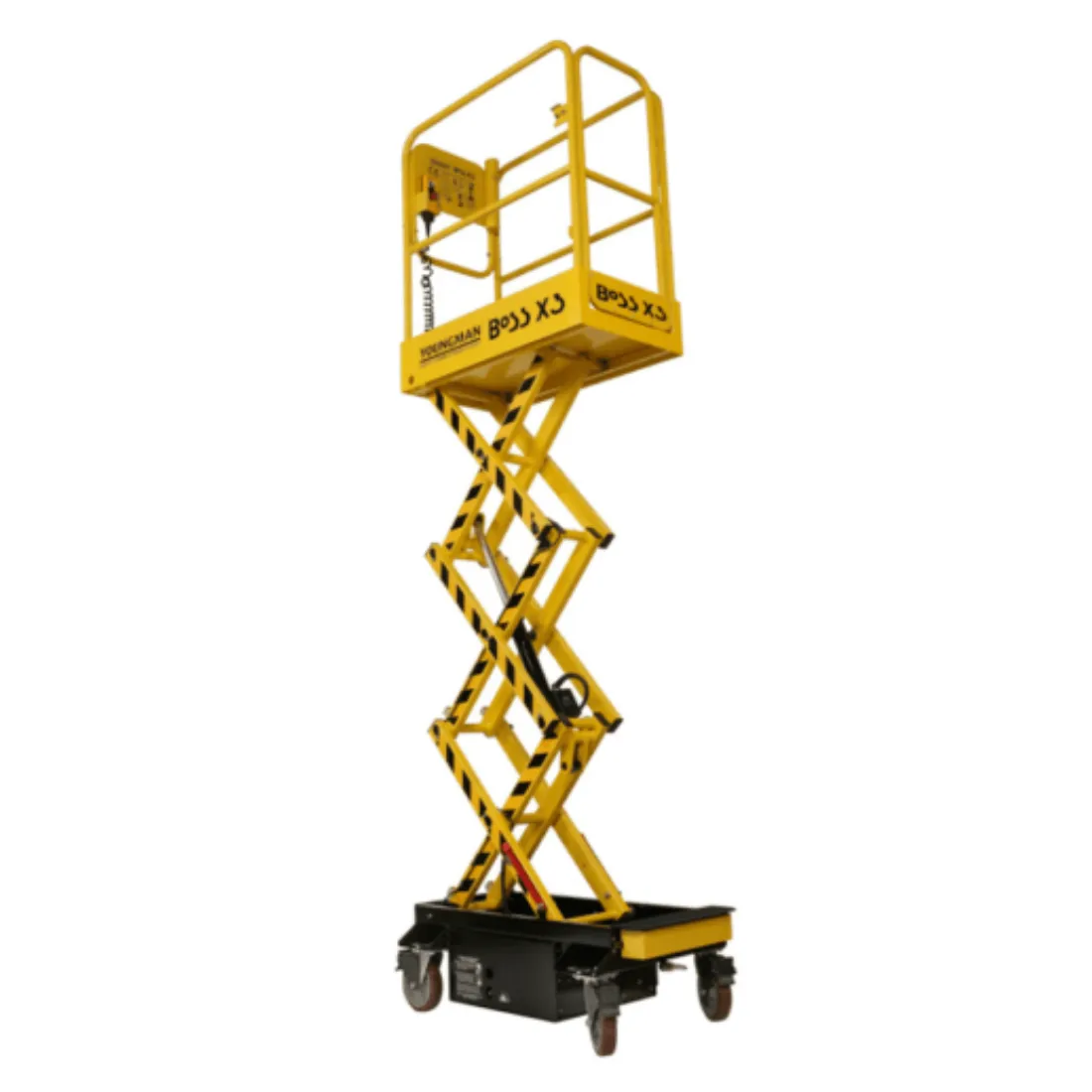
Best kit: BoSS X3 or Power Tower.
How to do it:
- Clear and sweep the floor so the platform moves freely.
- Find the joists or roof timbers, mark your fixing points and fit ceiling racks within the manufacturer’s weight limits.
- With the power off, fit LED battens to existing lighting circuits. A new circuit is notifiable, so leave that bit to a registered electrician.

Where can I use low level access equipment?
You can use low level access kit indoors on firm, level floors: living rooms, hallways, extensions and garages.
- Doorways: measure the actual opening, not the door. The podium tower is 0.68m wide and the Power Tower is 0.78m, which is wider than many internal doorways.
- Floor: powered platforms weigh 312kg to 394kg before you add yourself and your tools. Solid concrete floors, like most garages, are ideal. Timber floors, even on the ground floor, may not be suitable. Unsure? Choose the 34kg podium tower.
- Route: watch for steps, stairs, gravel and thresholds.
- Ceiling: leave room to raise the platform and stand comfortably, clear of light fittings.
Is it cheaper to hire or buy?
You’ll need to weigh up your options - are you going to need the equipment more than once a year or is this a one off job?
This table compares HSS DIY low level access platform hire with buying an access tower.
*Prices are correct as of November 2026 and are subject to change. Check live product pages for current pricing.
How do I stay safe on low level access equipment?
There are plenty of ways you can keep yourself safe whilst using low level access equipment -
- Do a pre-use check every time: guardrails, gate, wheels, controls and battery.
- Lock the wheels before you raise the platform.
- Keep the gate and guardrails closed while you work.
- Keep your feet on the platform floor, never on guardrails or steps.
- Move the platform rather than overreaching, and lower it before you move it.
- Stay within the safe working load, the maximum weight of people plus tools (250kg on the Power Tower).
- Wear safety glasses, gloves and a dust mask as needed. See our PPE range.
New to powered access? HSS Training runs PASMA and IPAF courses that show you how to use low level access equipment with confidence. HSE’s guide to the Work at Height Regulations 2005 explains more.

Project timeline
Most jobs run from order to collection in a few days. Here’s how to prep for your projects and tick off each job as you go.
- A week before: measure your doorways, floor and ceiling height, then pick your kit.
- Two or three days before: order online 24/7, hiring the tools and buying materials and PPE in one order. Next day delivery is available, though items may arrive separately.
- Delivery day: check the kit and read the instructions.
- Job day: do your pre-use checks, then allow 1 hour to a full day (8 hours).
- Collection: lower the platform and clear the route so we can collect it.
Quick checklist for low level access jobs
- ☐ Doorways and ceiling measured
- ☐ Floor checked for weight
- ☐ Pre-use checks done
- ☐ Wheels locked and guardrails closed
- ☐ Power off for electrical work
- ☐ Platform lowered for collection
FAQs
What is low level access hire?
Low level access hire includes podium steps, podium towers or powered platforms for jobs that up to about 5m high. Hiring means you get the right height for each job, without the cost of buying or the hassle of storing it.
Is low level access hire near me available?
Yes. HSS DIY delivers nationwide, with next day delivery available, plus Click & Collect from our partner branches. Simply put in your postcode on the product page to see which delivery option suits you.
Do I need training to use a Power Tower at home?
There is no legal requirement for private DIY. At work it is different: IPAF says training on a push-around vertical (PAV) platform, like the Power Tower, is a legal requirement. Even at home, a short course or familiarisation is worth it, so you know the controls and pre-use checks before you go up.
Can I use a powered access platform upstairs?
Not usually in a house. Low level powered access platforms weigh over 300kg, can’t go up stairs and may be too heavy for timber floors. Upstairs, a 34kg podium tower is the better choice, carried up by two people.
What's the difference between a podium tower and a scaffold tower?
Podium towers are smaller and made for indoor jobs at lower heights. Scaffold towers reach higher and work outside. Read podium towers vs scaffold towers.
Reach new heights with low level access equipment from HSS DIY
And there we have it - low level access equipment can help us with a number of jobs that a ladder just can’t reach.
From hanging the tree topper and painting the ceiling to fitting coving, swapping a high light fitting or kitting out the garage, low level access keeps you safe whilst working at height.
A podium tower covers most rooms, while a Power Tower or Pro IQ10 Pop Up handles double-height spaces and vaulted ceilings. Before you hire, make sure you measure areas you’ll be working on, pick your kit and get your projects done with confidence.
You can hire online 24/7 and get next day delivery for our low level powered access equipment. If you need any help, get in touch with our live chat experts who are on hand and happy to answer any questions.
Buy the materials. Hire the tools. One order. All in one place.
Get DIY Happy with HSS DIY: The Home of Great Projects.
Meet the people behind our Tips & Advice
From quick fixes to bigger DIY projects, get to know the people behind the guides helping you get the job done with confidence.