







⏱ Read time: 7 min | 🌿 Difficulty: Beginner | ⏰ Time: Half a day (4 hrs) | 👷 1 person
Stop the draughts first, then heat the room. Seal gaps around windows, doors and skirting with draught excluder strips and caulk, close the curtains at dusk and use a thermostat-controlled heater sized for the room. Heat only the room you’re using, not the whole house, and you’ll save energy and save money on energy bills.
The heater’s on, the thermostat says 20°C and you’re still wearing a fleece indoors? Sounds like you have a draught. Learning how to heat a draughty room without wasting energy is mostly about keeping warm air in. Get that right and even a modest heater does a good job.
Why does a draughty room cost so much to heat?
Warm air escapes through gaps almost as fast as you heat it, so some of what you pay for goes outside.
Cold air slips in under doors and around skirting, and your heater keeps running because the room never gets warm enough. So if you’re wondering how can I not waste energy in a draughty room, start with draught proofing, not with a bigger heater.
How can I find draughts in my home?
The quickest way to find draughts is the damp hand test. On a breezy day, slowly run the back of a damp hand around each likely gap. You’ll feel the cold straight away.
- Switch off extractor fans so they do not skew the results.
- Check windows where the opening part meets the frame, and where the frame meets the wall.
- Check external doors along the bottom and sides, plus the letterbox and keyhole.
- Check skirting boards, loft hatches and fireplaces, then mark each gap with masking tape.
How can I draught proof my home step by step?
The steps below match common draught proofing products to the gaps they are made for, so you buy the right thing first time.
Step 1: seal the windows
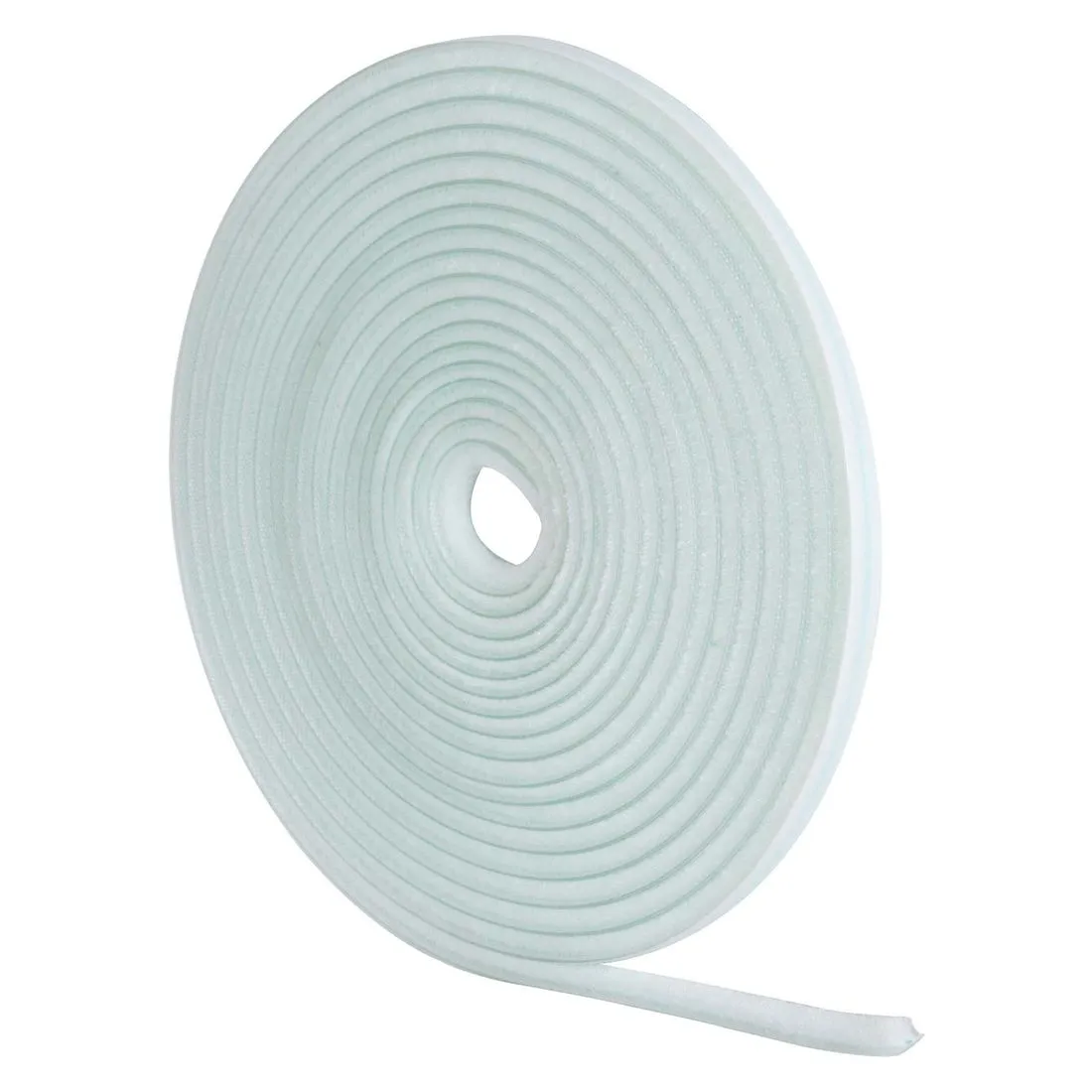
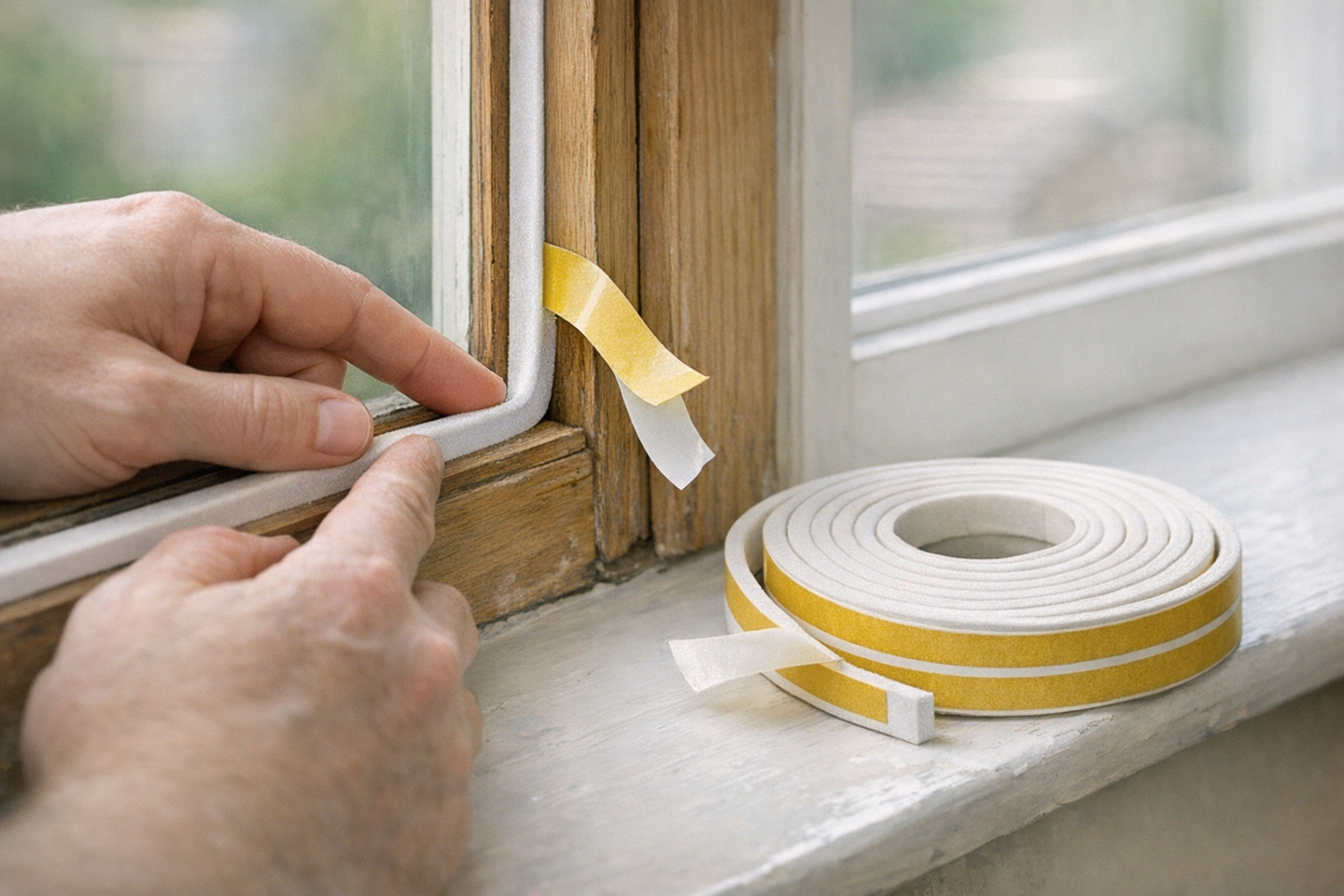
Clean the frame and let it dry so adhesive strip will stick. Cut the foam draught excluder to length, peel the backing and press it into the rebate so the closed window squashes it a little.
Step 2: stop draughts around external doors
Fit a threshold excluder along the bottom and a perimeter seal around the frame, then add a letterbox brush and keyhole cover. Leave internal doors unsealed, because they need a small gap for airflow.
Step 4: deal with the loft hatch and chimney
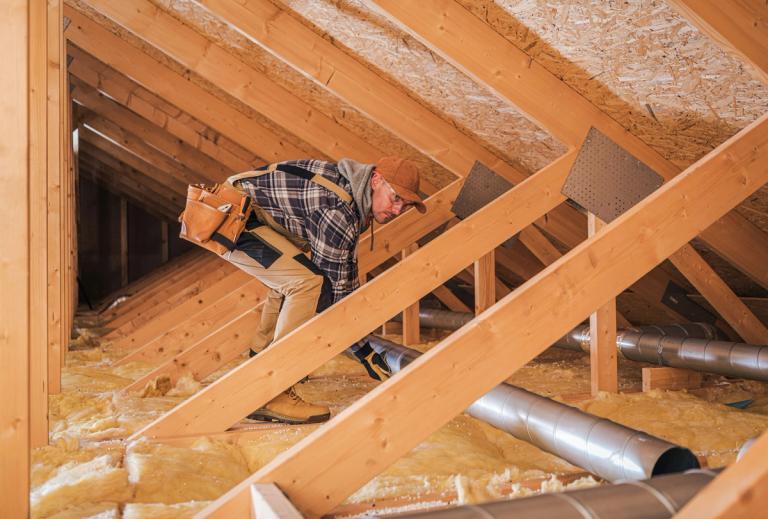
Stick foam or brush strip around the hatch frame, and check your loft insulation while you’re up there. A chimney draught excluder in an unused fireplace could save around £60 a year, according to the Energy Saving Trust. It must not fully block the flue and must come out before you light a fire.
What are the cheapest ways to heat a room?
With the draughts sorted, the most cost-effective plan is usually to heat only the room you’re in, only while you’re in it, with a heater that has a thermostat.
Standard plug-in electric heaters use almost all their electricity to create heat. Therefore, savings depend on control, not the type of heater. Multiply the output in kW by your unit rate. At the Ofgem price cap average of 26.32p per kWh (October to December 2026), a 1.5kW radiator costs up to about 39p an hour on full, or 13p on 500W. See our electric heater running costs guide.
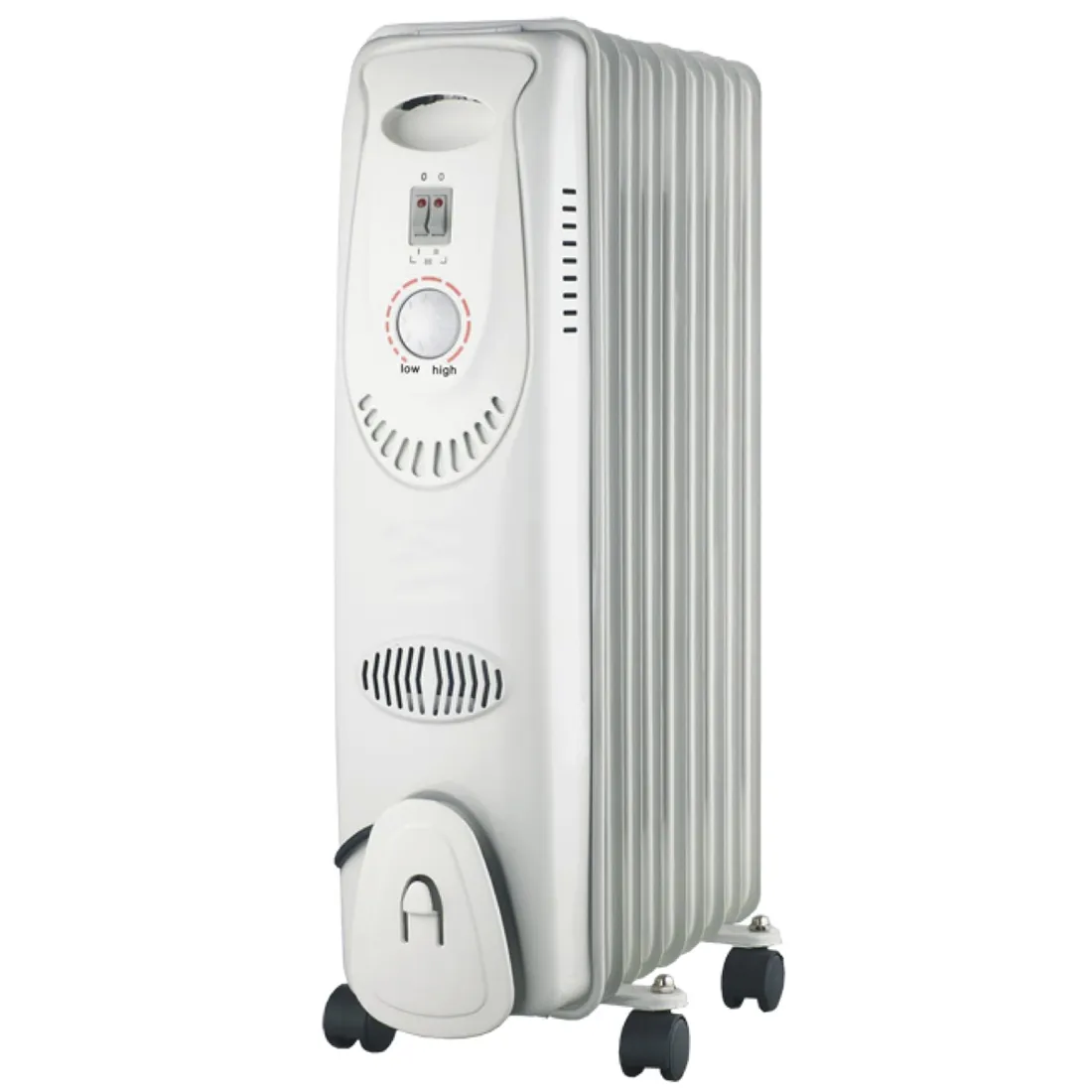
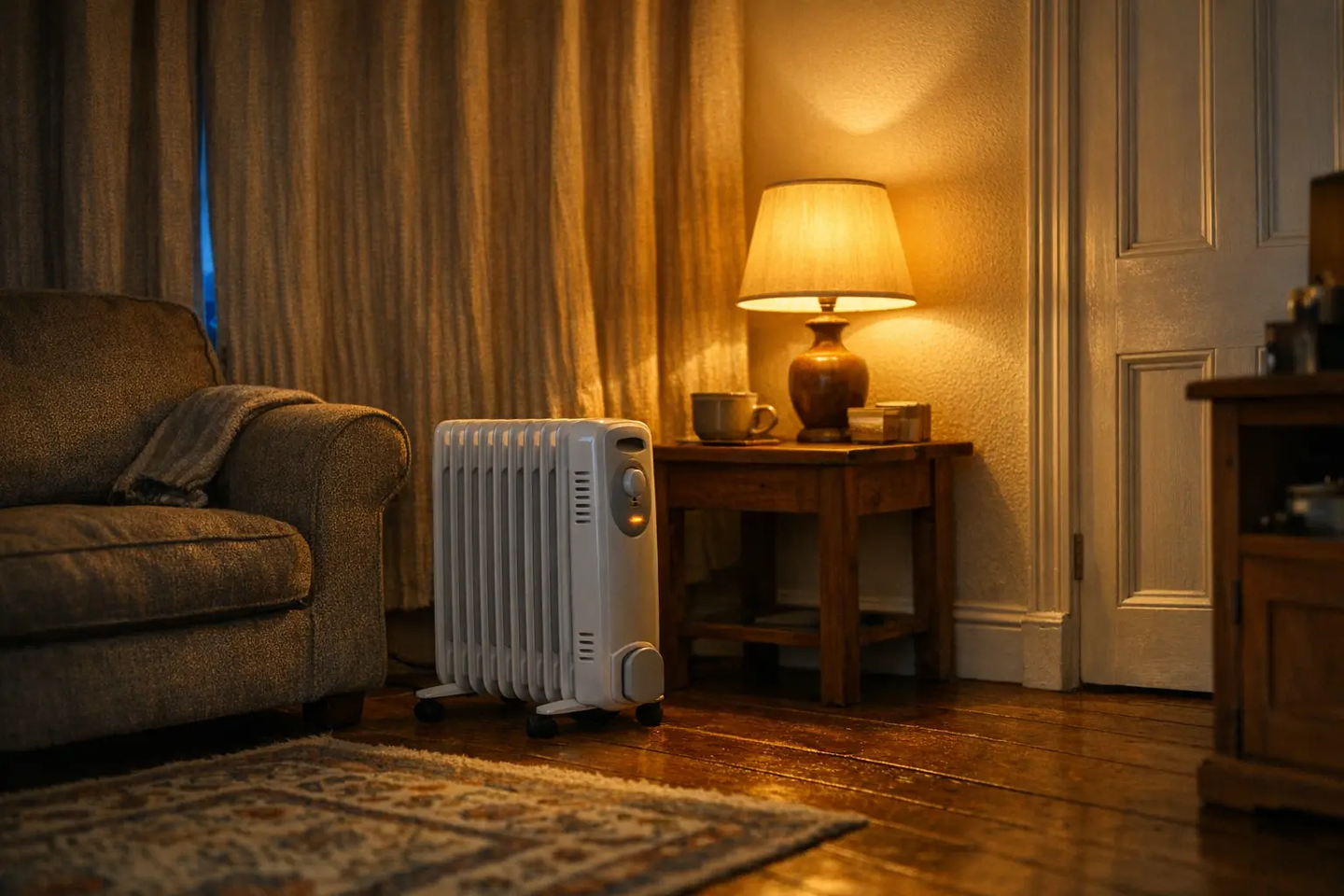
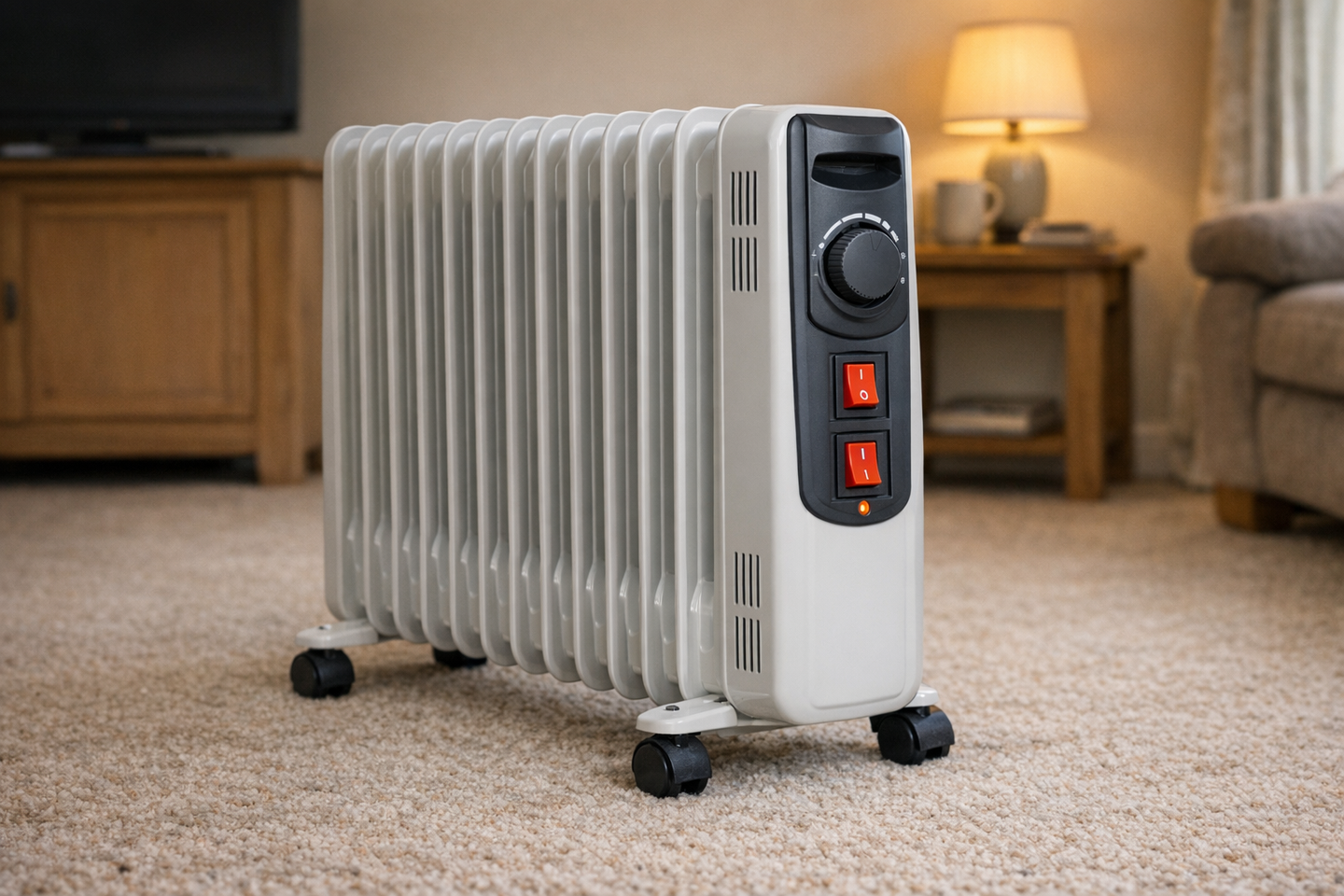
- Oil-filled radiator: best for rooms you sit in for hours. Slow to warm up, but it holds heat after the thermostat clicks off.
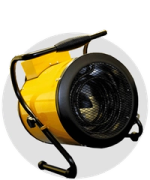
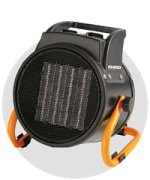
- Fan heater: best for short bursts, like a home office first thing. Fast to warm up, but noisier for long sessions.
How do I heat a room without putting the heating on?
There are a few things you can do to heat up a room without having to put the heating on.
- Use curtains: open them on sunny days and close them at dusk.
- Shut internal doors: keep warmth in the room you’re using.
- Move furniture: a sofa against the radiator soaks up heat.
- Add a rug: bare floorboards feel cold underfoot.
We’re all for saving money, but not if it’s going to affect your health. The NHS recommends heating the rooms you use regularly to at least 18°C if you can.
Should I hire or buy a heater?
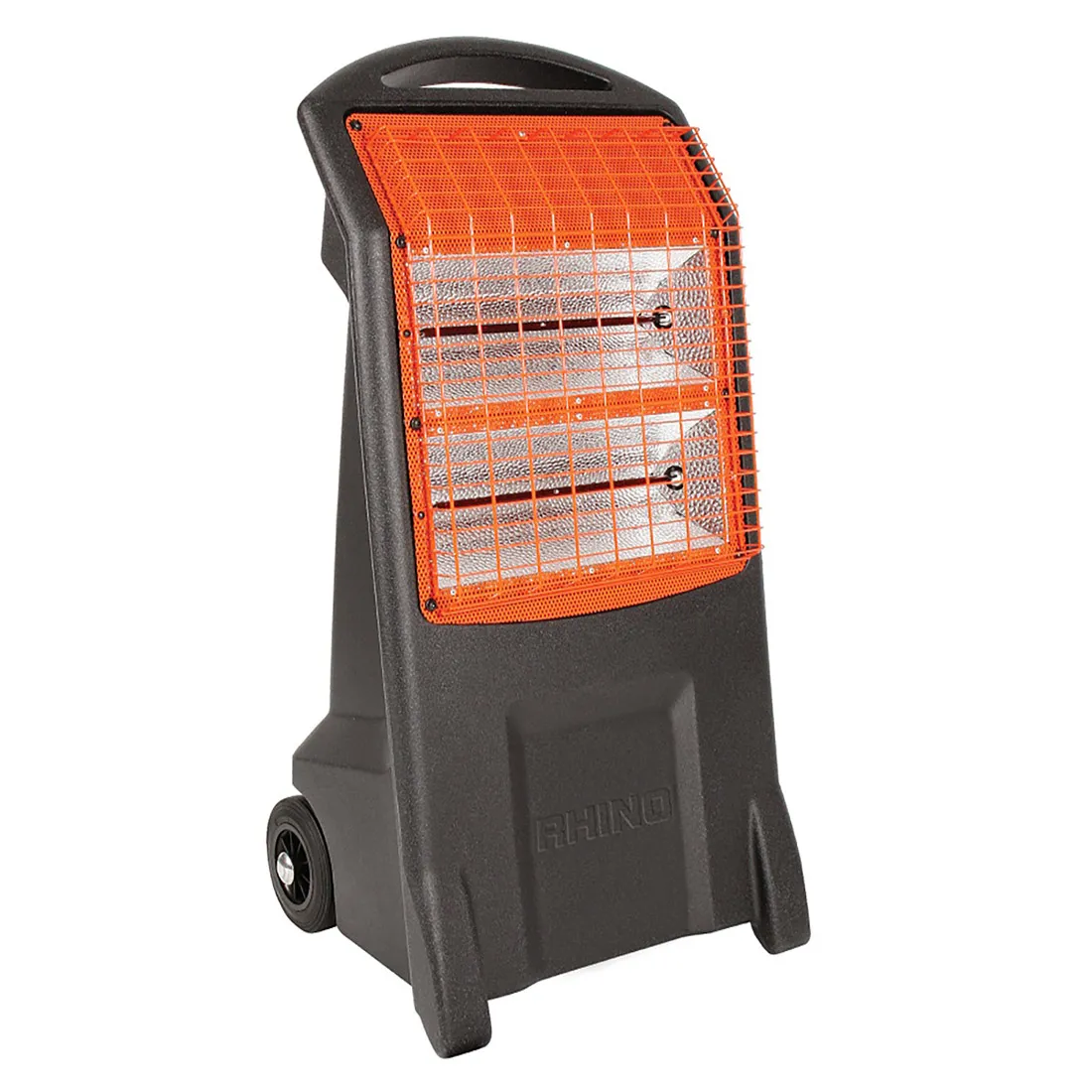
Hiring is best for short-term needs, like a boiler breakdown, drying out after a leak, or heating a site for a few weeks. You get the right heater for the job, with no storage or upkeep. If you need heat every winter, buying may work out cheaper over time.
Worked example: warming up a draughty back room
Here’s how the steps above come together in a typical project. The room is a downstairs back room with one casement window and an inward-opening back door. The curtains twitch on windy days, there’s a chill along the skirting, and the radiator never seems to keep up.
- Window: a 15m roll of Sureseal foam draught excluder (£3.96*) seals small gaps up to 3mm around the opening casement. One window uses only a few metres, so there’s plenty left over for the landing loft hatch.
- Back door: a Slikseal around door seal (£7.44*) closes gaps up to 7mm around the frame. A CDx threshold excluder (£12.24*) stops the draught underneath. It is 914mm long, so check your door width first.
- Skirting and frame cracks: one 280ml tube of EVO-STIK decorators caulk (£4.56) covers about 10m of 6mm bead. That’s enough for the skirting and the window and door frames in most rooms. Apply it with a skeleton caulking gun (price TBC).
- Heat: an Airmaster 1.5kW oil-filled radiator (£46.45*) has 500W, 1000W and 1500W settings and an adjustable thermostat. That’s enough for a room you sit in all evening.
Total: £74.65* plus the caulking gun. The project takes about half a day for one person.
Running cost: on full power, the radiator uses 6kWh over a four-hour evening. At the Ofgem price cap rate of 26.32p per kWh, that’s up to about £1.58 a night, or £7.90 for five evenings. In practice, it costs less. The thermostat turns off the heater when the room is warm. A well-sealed room stays warm longer.
*Prices are correct as of October 2026 and are subject to change. Check live product pages for the current price.
Health and safety: what should I watch out for?
Draught proofing is low risk, but heaters and ventilation need respect. These points come from Electrical Safety First and the Energy Saving Trust.
- Give heaters space: at least one metre from curtains, furniture and paper.
- Plug into the wall: extension leads can overload.
- Stay with it: never leave a heater on unattended or while you sleep.
- Keep vents clear: air bricks, trickle vents, extractor fans and vents for gas appliances or open fires.
- Fit alarms: a smoke alarm nearby and a carbon monoxide alarm wherever there’s a fuel-burning appliance. Browse our fire safety range.
- Air the room daily: sealed rooms can build condensation. If damp builds up, try our drying range.
How long does draught proofing a room take?
It will roughly take about half a day for one room, even on your first go.
- Draught hunt: 30 minutes
- Clean and dry frames: 30 minutes
- Fit window strips: 1 hour
- Fit door seals: 1 hour
- Caulk cracks: 45 minutes
- Set up the heater: 15 minutes
Total: 4 hours, one person.
Draught proofing checklist
Here is a draughty room project checklist to keep you on track. Print it, stick it on wall and tick as you go.
- ☐ Draught hunt done and gaps marked
- ☐ Vents and air bricks noted, to stay clear
- ☐ Window strips fitted
- ☐ Door seal, threshold excluder, letterbox brush and keyhole cover fitted
- ☐ Cracks caulked
- ☐ Loft hatch sealed
- ☐ Heater with thermostat placed 1m from furniture, plugged into the wall
- ☐ Smoke and CO alarms tested
FAQs
Is a plug-in heater cheaper than central heating?
Not per unit. Gas costs 7.97p per kWh, while electricity costs 26.32p under the current cap (October 2026). This means a boiler is usually better for heating the whole house. A plug-in heater makes sense when you only need one room warm for a few hours.
How can I save money on my energy bills without spending anything?
Close curtains at dusk, shut internal doors and only heat rooms you use. See our guide to making your home more energy efficient.
How can I stop draughts in my home if I rent?
You can use removable options like self-adhesive strips and fabric draught excluders. Ask your landlord before fitting anything screwed in.
Does draught proofing cause damp?
It shouldn’t if you leave intended ventilation alone and air rooms briefly each day.
Can I leave an oil-filled radiator on overnight?
Electrical Safety First does not recommend running any heater overnight, but says an oil-filled radiator is the lower-risk choice if you do.
How often should I replace draught excluder strips?
Change them when they become squashed flat, torn, or peeling, and repeat the damp hand test each autumn.
Should I draught proof before buying a more powerful heater?
Yes. Sealing gaps first helps warm air stay in, so a smaller thermostat-controlled heater can do more work for less.
Which draughts should I avoid sealing completely?
Do not block air bricks, trickle vents, extractor fans, or vents for gas appliances and open fires. Leave internal doors with a small airflow gap too.
How do I estimate the running cost of an electric heater?
Multiply the heater output in kW by the hours used, then multiply by your electricity unit rate. For example, the 1.5kW radiator uses 6kWh over four hours on full power, which costs up to about £1.58 at 26.32p per kWh. It may cost less if the thermostat turns it off once the room is warm.
Is an oil-filled radiator or a fan heater better for a draughty room?
After draught proofing, choose based on use. An oil-filled radiator suits longer sessions because it holds heat after the thermostat clicks off. A fan heater is better for quick bursts, such as warming a home office first thing, but it is noisier for longer use.
Warm up that draughty room with HSS DIY
So there we have. A draughty room does not need a bigger heater. It needs fewer gaps.
Spend an afternoon sealing windows, doors and skirting, then let a thermostat-controlled heater handle the rest. You’ll stop paying for heat that goes straight out the window and start enjoying a warm room you actually want to sit in, without dreading the next bill.
Keep the warmth going with our guide to insulating your loft before winter.
You can hire or buy everything you need for this project online anytime. Next day delivery is available for some items. Pick up your draught proofing essentials and a heater to hire or buy in one order. Please note that if your order includes several items, they may arrive separately.
Buy the materials. Hire the tools. One order. All in one place.
Get DIY Happy with HSS DIY: The Home of Great Projects
Meet the people behind our Tips & Advice
From quick fixes to bigger DIY projects, get to know the people behind the guides helping you get the job done with confidence.